
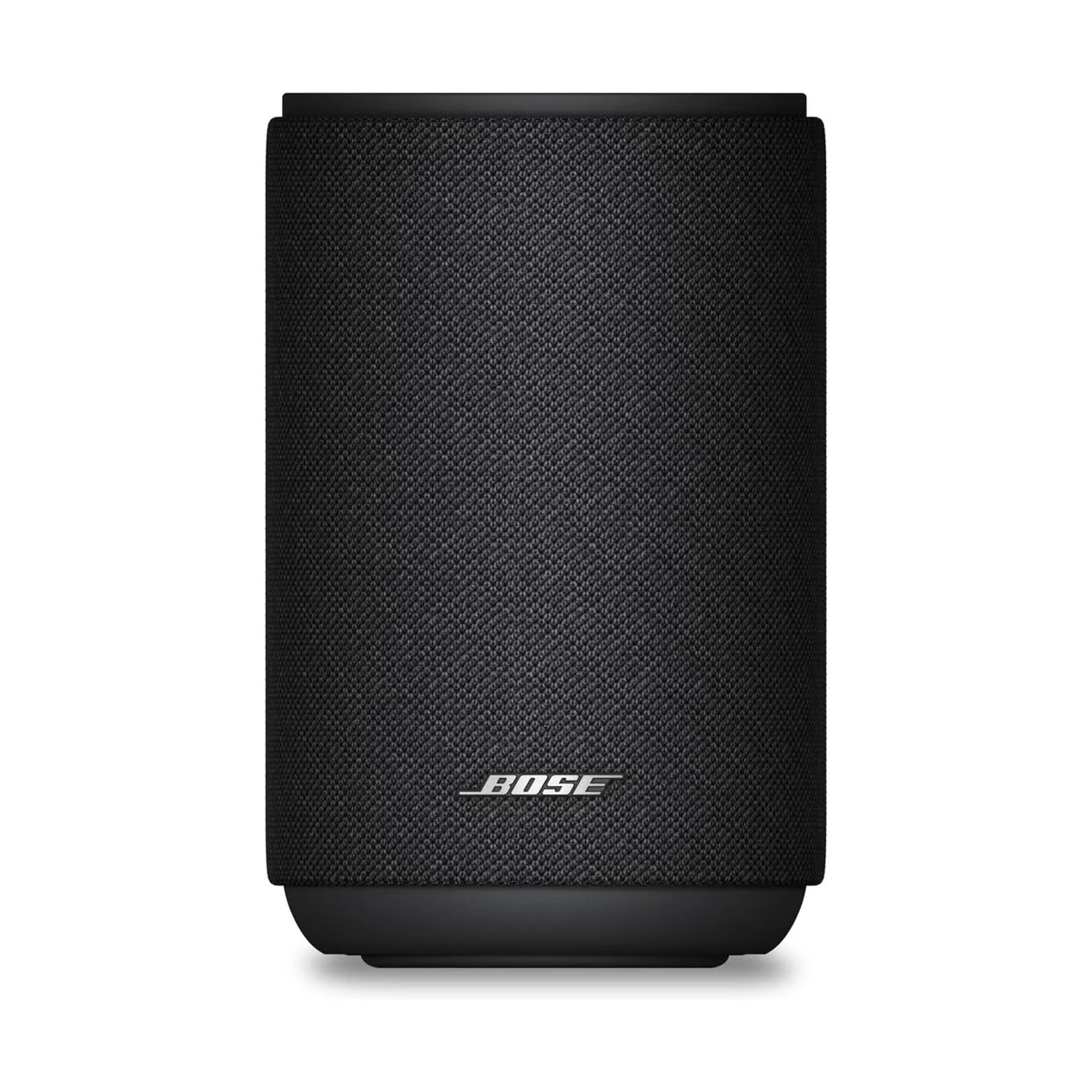
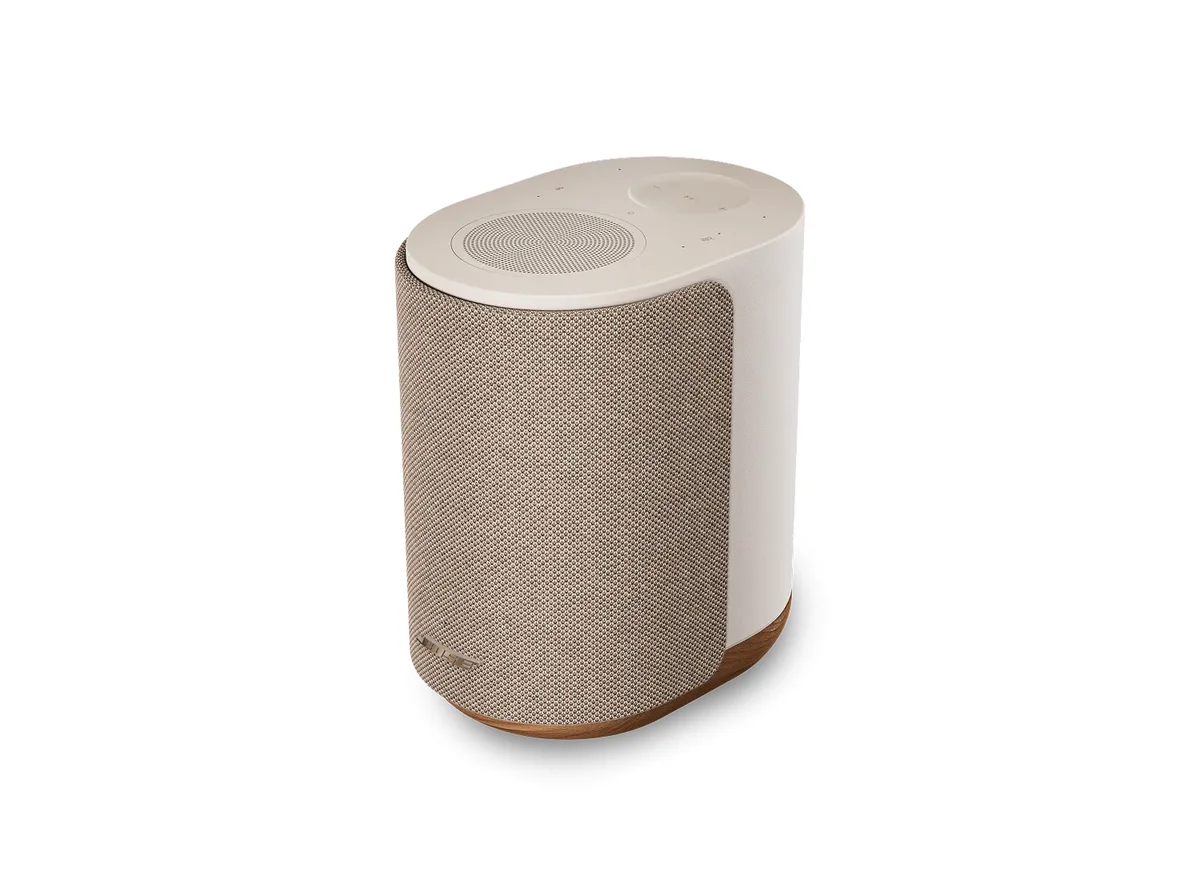
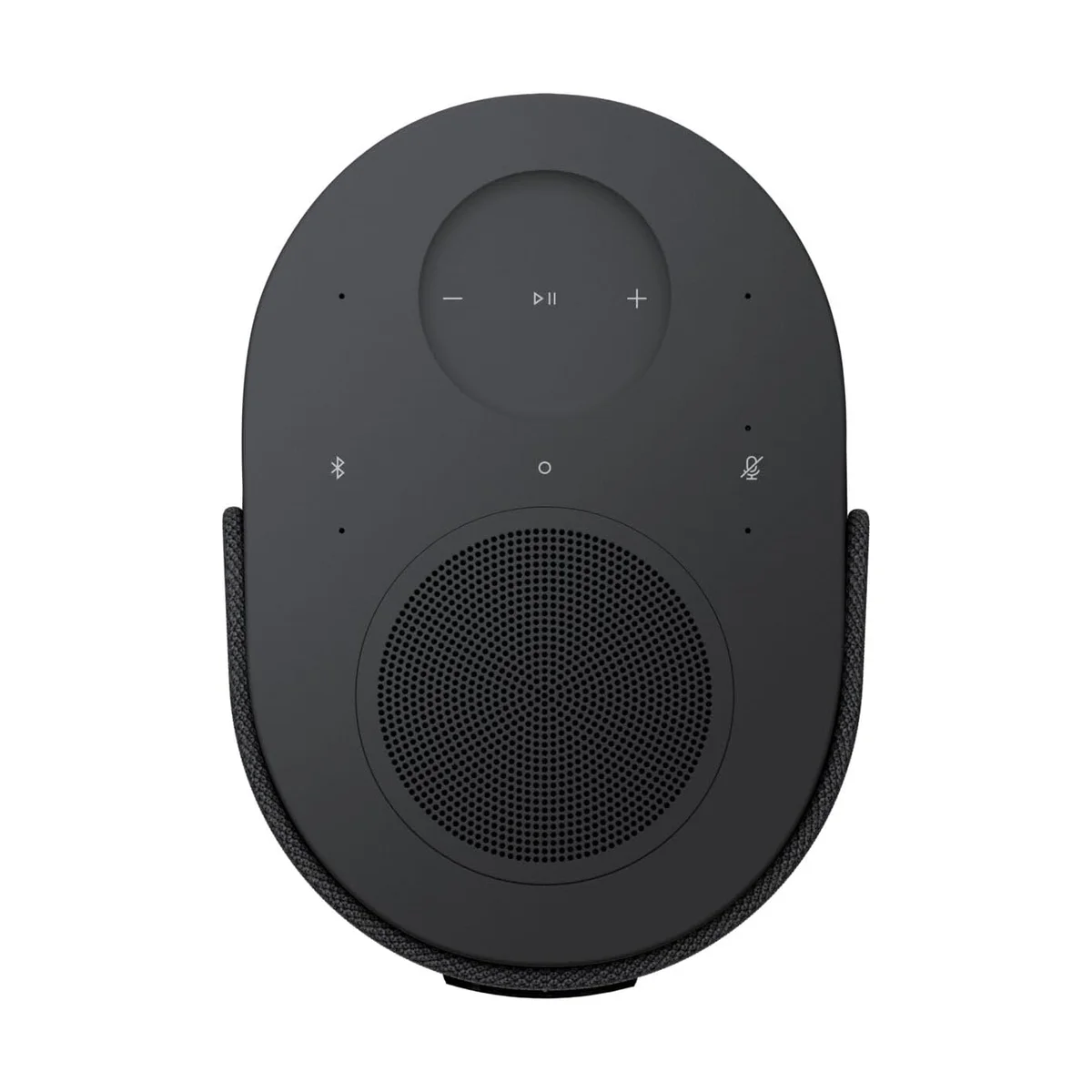
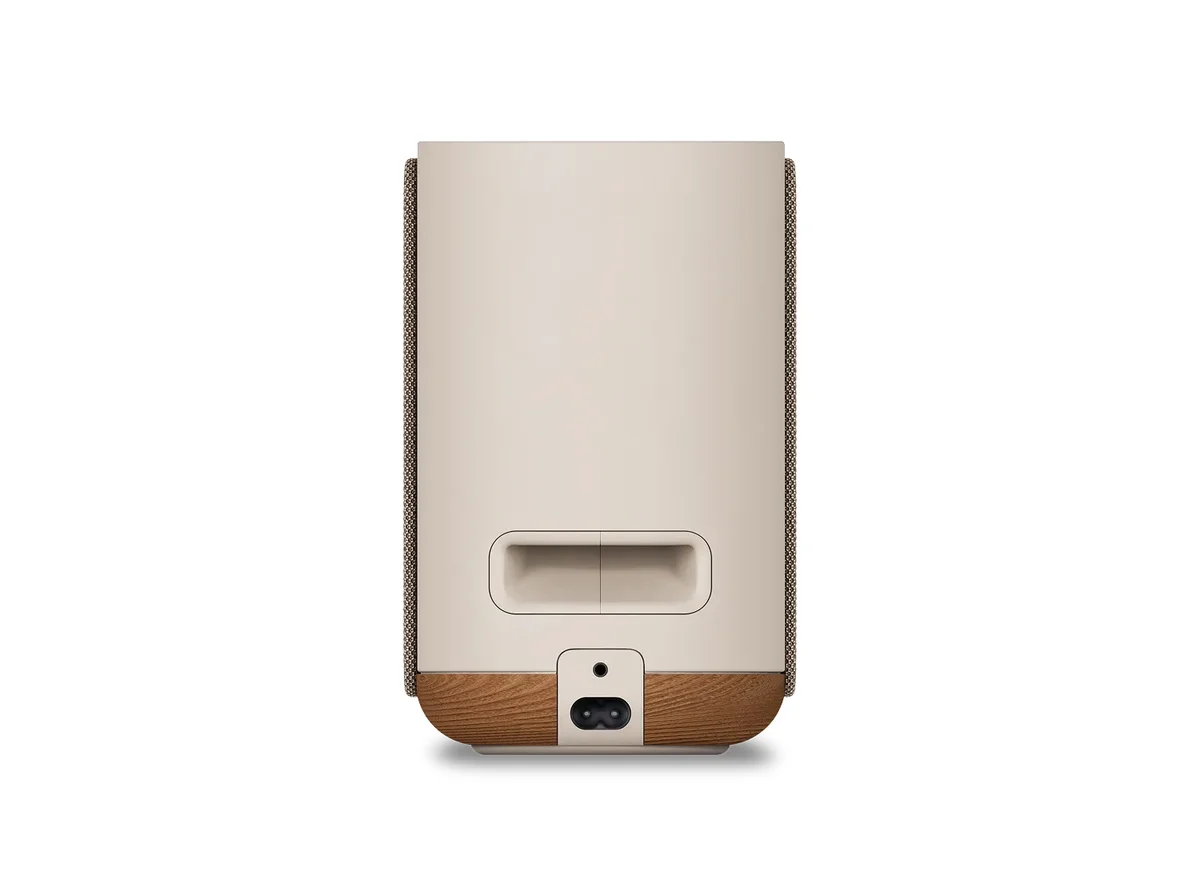
Tech Fowler's full review of the Bose Lifestyle Ultra makes the case clearly: in a category overflowing with $99 pucks and $300 living-room cylinders, almost nothing combines premium spatial audio with genuinely flexible streaming inputs. The Bose has an upward-firing driver — the same trick Sonos charges $450 for in the Era 300 — packed into a $299 pill-shaped speaker that Tech Fowler measured as 'sounding way bigger than it physically should be.' The connectivity story is what really separates it from the pack: Wi-Fi 6, Bluetooth 5.3, AirPlay 2, Google Cast, Spotify Connect, and a real 3.5mm Aux input. Tech Fowler successfully plugged a turntable in and wirelessly broadcast the vinyl signal to other speakers around the house. No other speaker in this set does that. Alexa Plus comes built in, the industrial design (knit fabric, hidden LEDs, three finishes including Driftwood Sand) reads as home decor rather than tech, and it can pair as Atmos rear surrounds with the matching Bose Lifestyle Ultra soundbar later. It's the speaker that doesn't lock you into anyone's ecosystem.
What It Won't Do
The Bose has no built-in smart-home hub. No Zigbee, no Thread, no Matter networking — if you want to control Hue lights or door locks directly from the speaker, you'll need a separate hub. That's a genuine gap compared to the Echo Dot Max's full Zigbee + Thread + Matter stack for a third of the price. Tech Fowler also hit Wi-Fi 6 setup bugs that forced him to drop his network to 2.4GHz during initial pairing. And stereo expansion is brutal: two of these is $600, where two Echo Dot Maxes (admittedly with worse audio) would be $200.
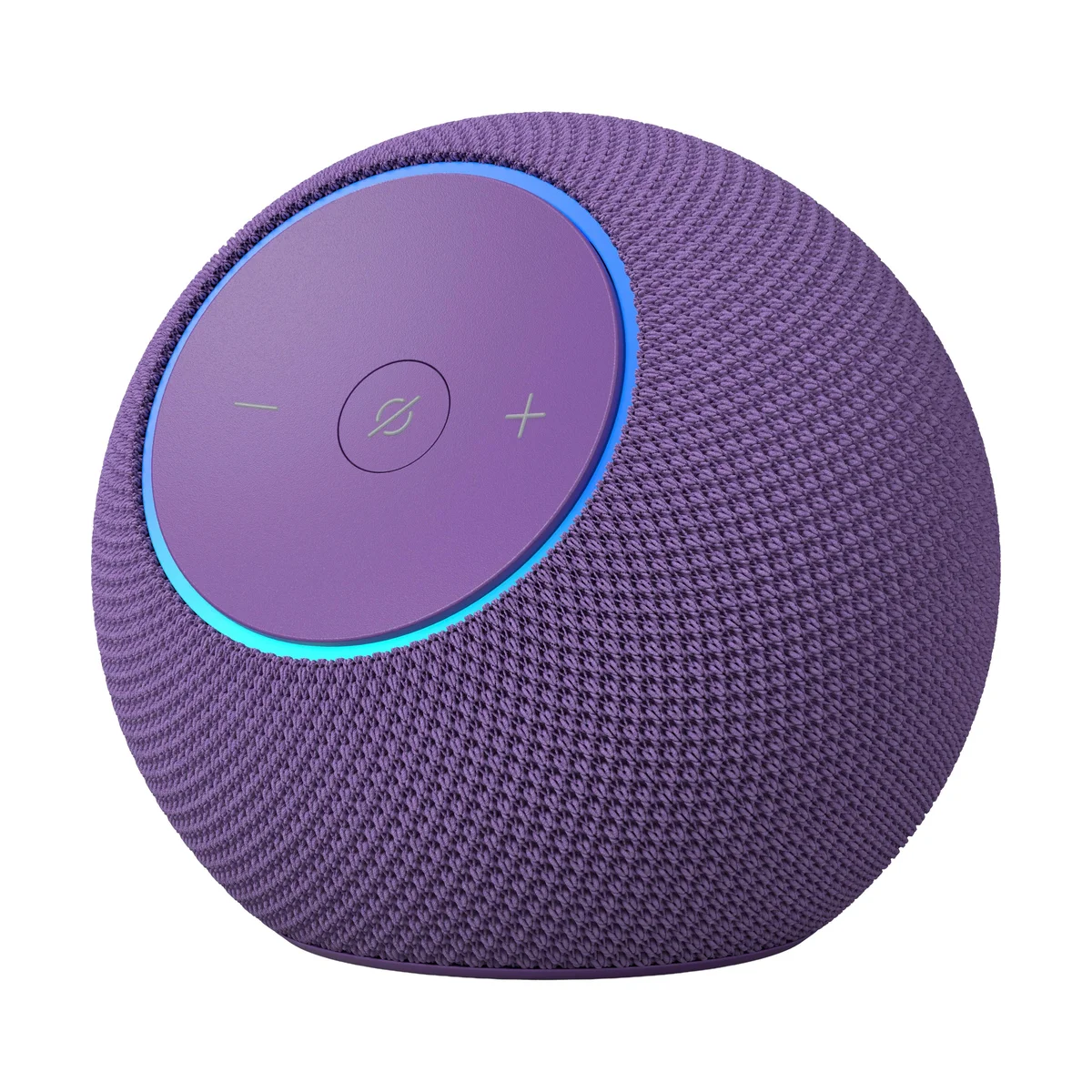
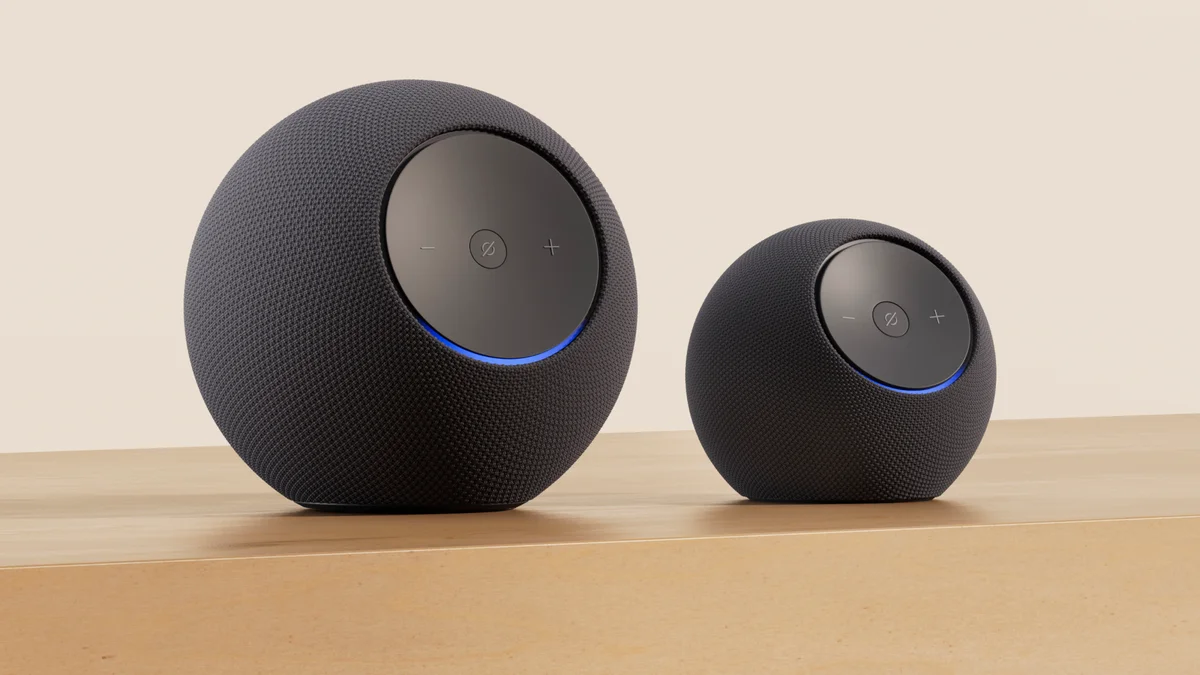
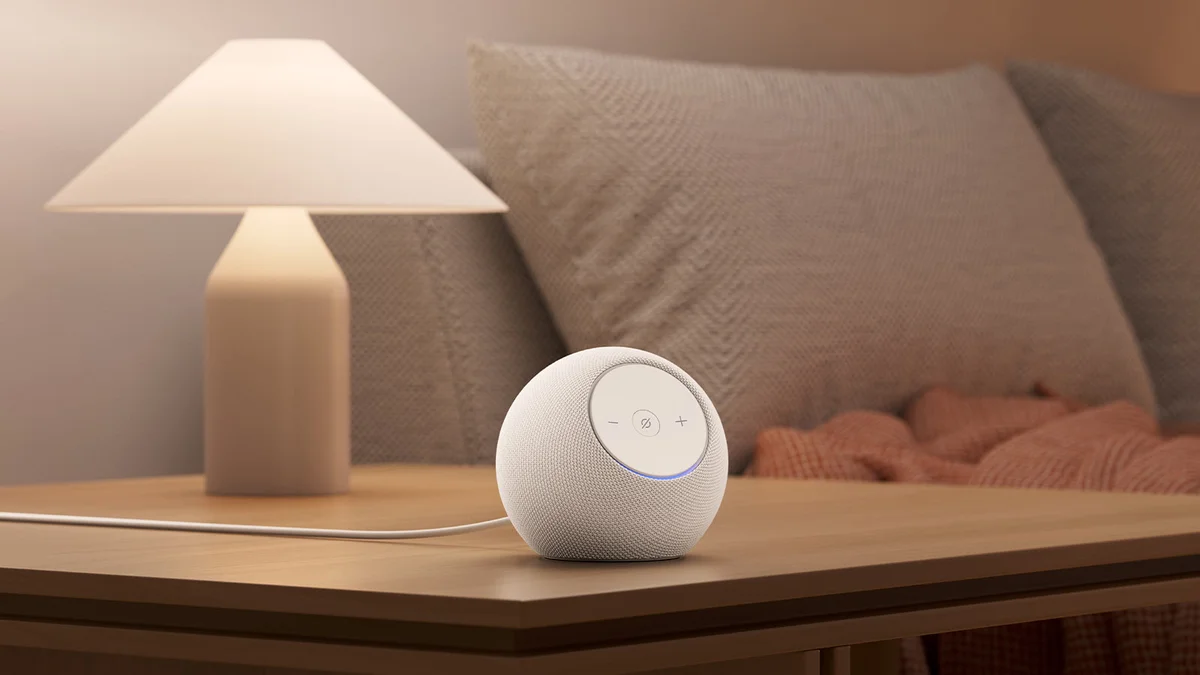
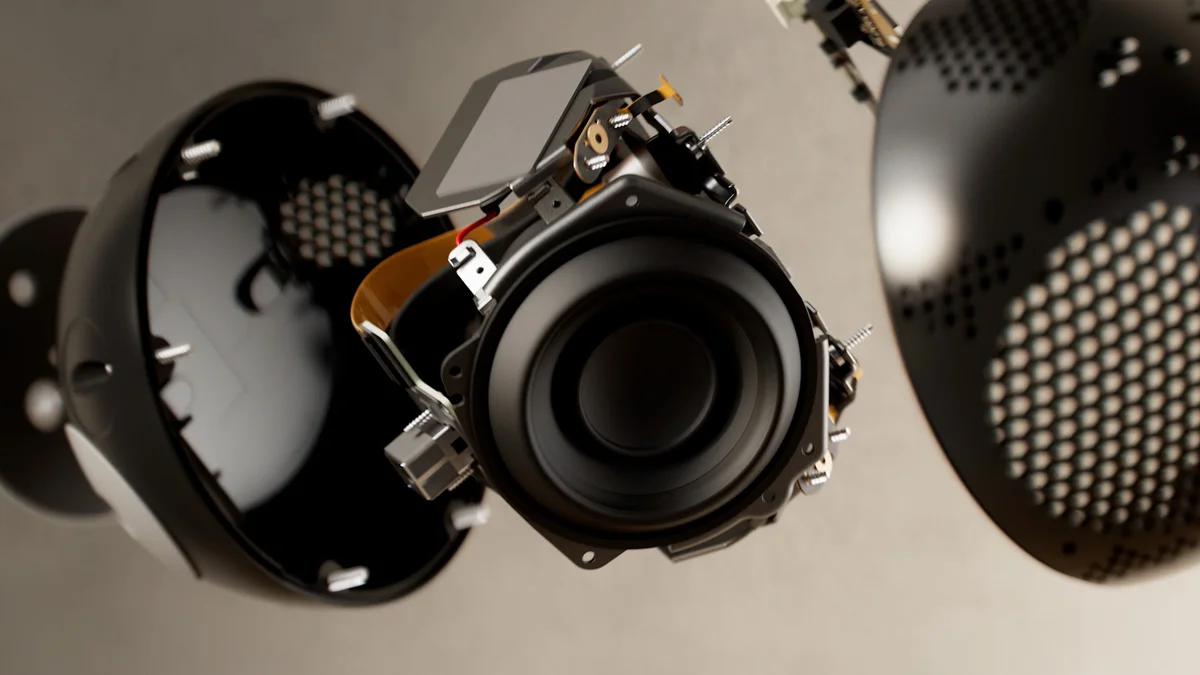
The Echo Dot Max is the rare value pick that actually beats more expensive products on multiple dimensions. landpet's head-to-head test against the HomePod Mini showed the new A3 Pro chip handling multi-turn conversational follow-ups about cheetahs while Siri gave up and dumped results to the iPhone. Craig's Tech Talk called the smart-home story 'a hub in a box': built-in Zigbee, a Thread border router, a Matter controller, plus Omnisense ultrasonic-presence and temperature sensors that trigger routines automatically. When your internet drops, Zigbee and Thread devices paired directly to the Dot Max keep working. Audio gets a meaningful boost too — a dedicated tweeter and woofer with room calibration delivers noticeably better bass than the Echo Pop or older Dots, per Craig's testing. At $99, no other speaker in the category combines the strongest current voice assistant, a complete smart-home hub, and listenable music playback.
What It Won't Do
The Dot Max's microphones occasionally miss the wake word in landpet's testing — he had to repeat commands more often than with other Echo models. Craig's Tech Talk flagged that out-of-the-box treble is 'ear-piercing' and required manual EQ adjustment. And Amazon's ecosystem keeps pushing ads and 'By the way…' upsells, which is the same trade-off it's always been. None of this changes the math at $99, but expect to spend ten minutes tuning the EQ on day one.
Who Should Buy Which
Bose Lifestyle Ultra Smart Speaker
Upward-firing spatial audio plus the most flexible streaming inputs on the market — built like home decor.
- Primary living room or kitchen speaker — audio quality matters most
- Multi-source streaming household (Spotify + Apple Music + AirPlay)
- Existing smart-home hub (or no smart-home plans)
- Values furniture-grade industrial design
- Plans to add Atmos rear surrounds to a Bose soundbar later
Amazon Echo Dot Max
Alexa Plus on the A3 Pro chip, plus a built-in Zigbee + Thread + Matter hub — for $99.
- Building a smart home on a budget — wants Zigbee + Thread + Matter built in
- Wants the strongest current voice assistant (Alexa Plus on A3 Pro)
- Bedrooms, offices, and secondary rooms where audio is background
- Already invested in Amazon ecosystem (Fire TV, eero)
- Wants local smart-home control that survives an internet outage