
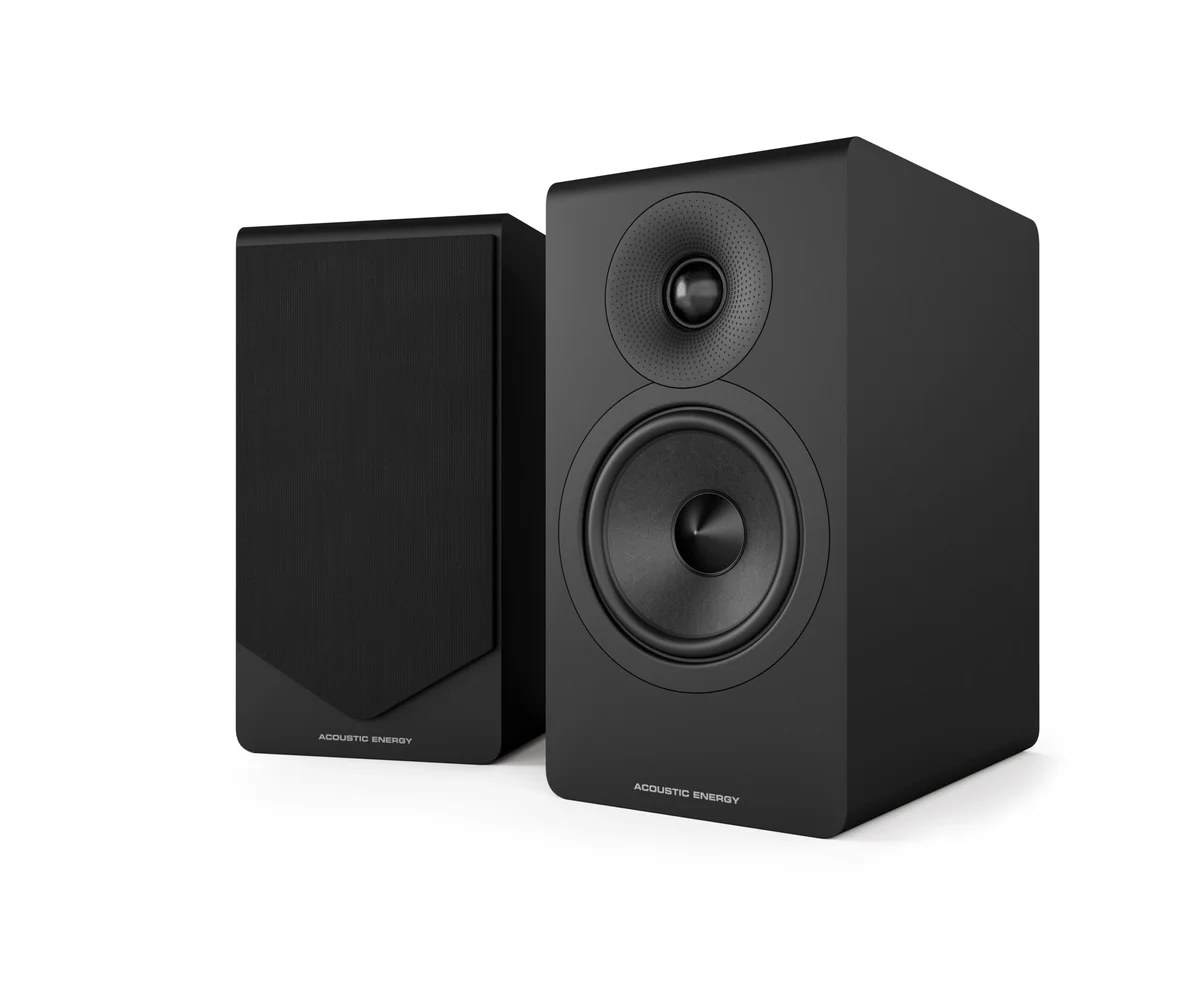
The Acoustic Energy AE300 Mk2 earned What Hi-Fi?'s #1 ranking among all bookshelf speakers for 2026 with a perfect five-star score — and then collected a StereoNET Applause Award on top. What Hi-Fi?'s Kashfia Kabir specifically praised the AE300 Mk2's 'unfussy and nicely balanced nature' and noted that 'high-frequency sounds shimmer rather than sizzle' — a way of saying the speaker resolves detail without ever sounding etched or analytical.

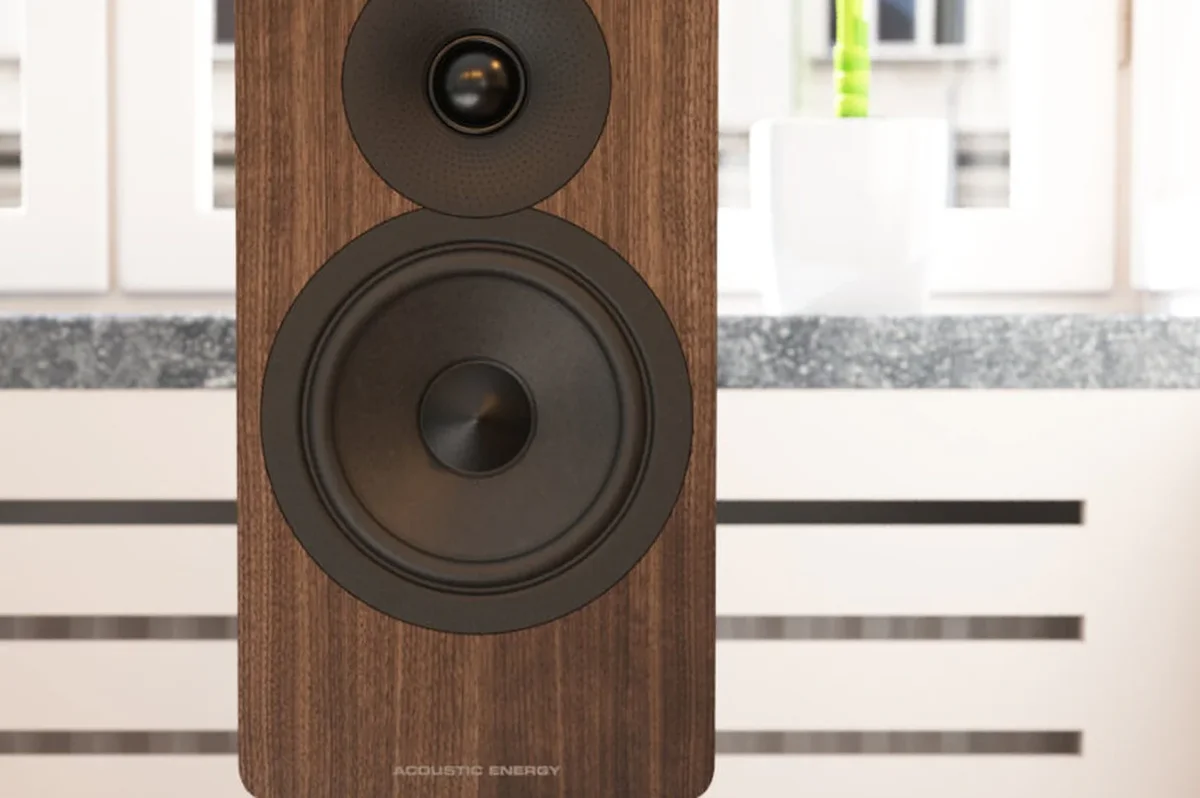
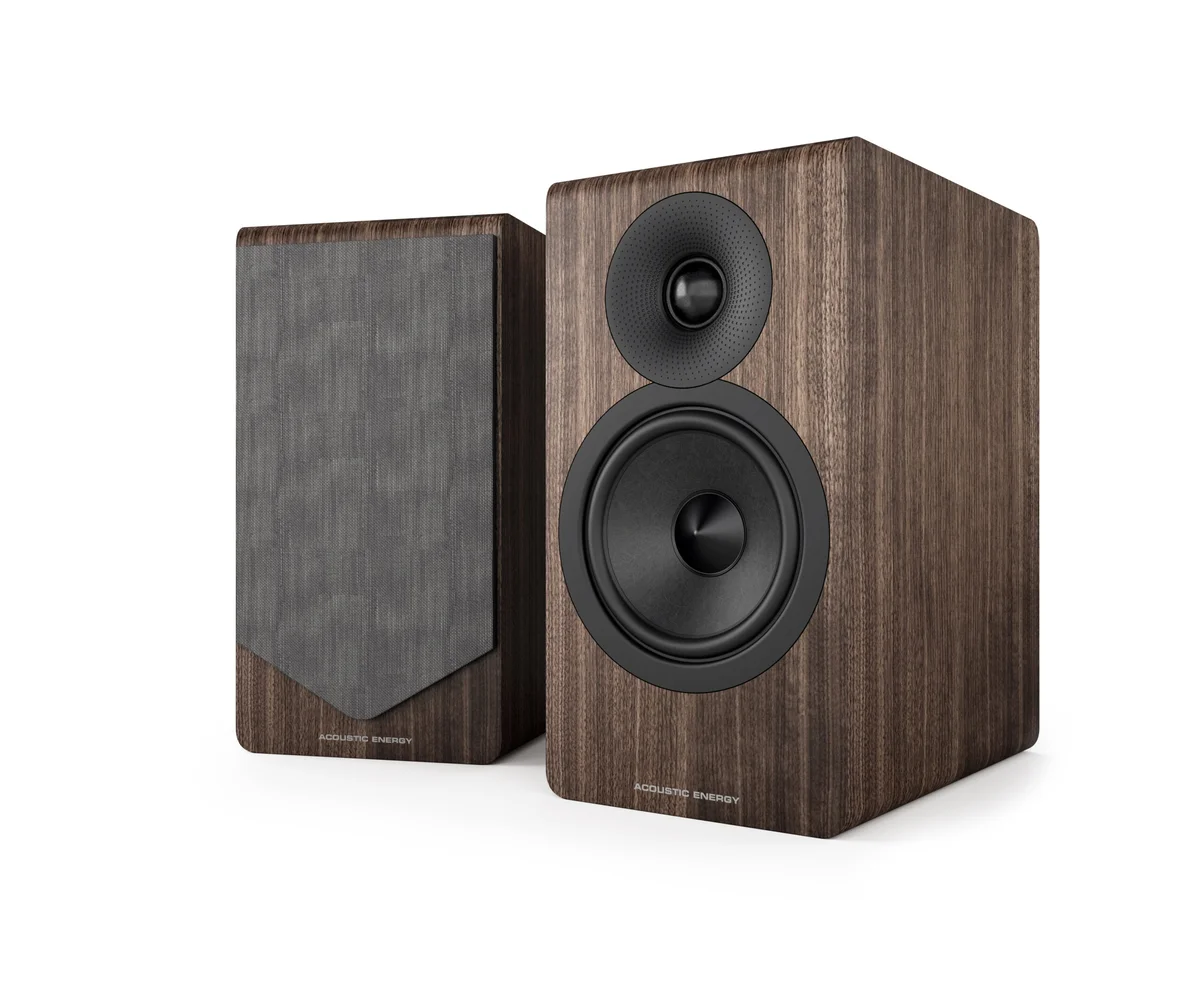
The technical recipe is unfashionable but executed with rare discipline. A 120mm paper/coconut-fibre woofer pairs with a 29mm fabric dome tweeter in a properly braced cabinet — no exotic ribbon drivers, no metamaterial gimmicks. What you get instead is a tonal honesty that pays dividends across genres: voices sit naturally, strings have proper texture, and bass is taut rather than bloated. Reviewers consistently note that the AE300 Mk2 doesn't impose a 'house sound' on recordings — it gets out of the way.
The other consideration is amplifier flexibility. At 6 Ω with 86 dB sensitivity, the AE300 Mk2 plays nicely with a wider range of amplifiers than the more demanding KEF Q Concerto Meta (4 Ω, 85 dB). A $400 integrated amp will already extract serious music from the AE300 Mk2; a $1,500 amp will reveal more, but the entry path is gentler. This makes it the most defensible Best Overall pick for buyers building a first serious stereo system in the $1,500-$3,000 total bracket.
What It Won't Do
What Hi-Fi? was specific about the AE300 Mk2's one cosmetic weakness: 'matte finish can show up finger marks' more readily than the gloss-lacquered finishes on rivals like the Monitor Audio Bronze 50 7G. It's purely a wipe-down problem, but worth knowing if you have curious children or dust-averse housekeeping. The more meaningful caveat is that 42 Hz bass extension, while strong for a compact two-way, isn't enough for movies or bass-heavy electronic music in larger rooms. A subwoofer remains a sensible addition for owners who watch films through the system. And while the AE300 Mk2 is tonally honest, listeners who specifically want the immediate dynamics and presence of a horn-loaded design will find Klipsch's RP-600M II more exciting on rock and live recordings — that's a matter of taste, not engineering.
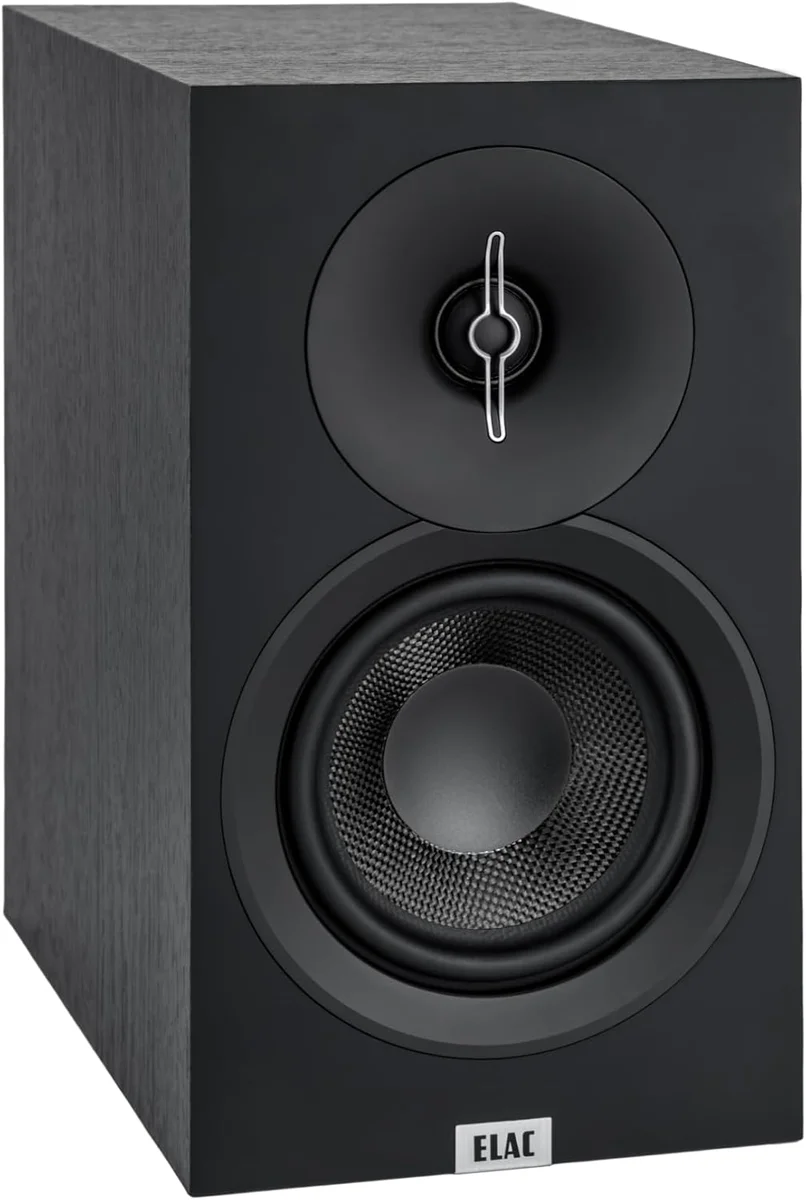
The ELAC Debut 3.0 DB63 is the rare under-$500 speaker that two independent expert panels both rank #1 in its bracket. JPK's reviewer-and-measurement comparison (cross-referenced with Erin's Audio Corner third-party data) ranked it best overall in the passive under-$500 segment, calling it 'detailed, neutral … strong all-rounder.' Crutchfield's hands-on audition put it #2 in their broader budget roundup at 5/5 stars across 76 customer reviews, describing the sound as 'full sound like sitting in a small venue.'
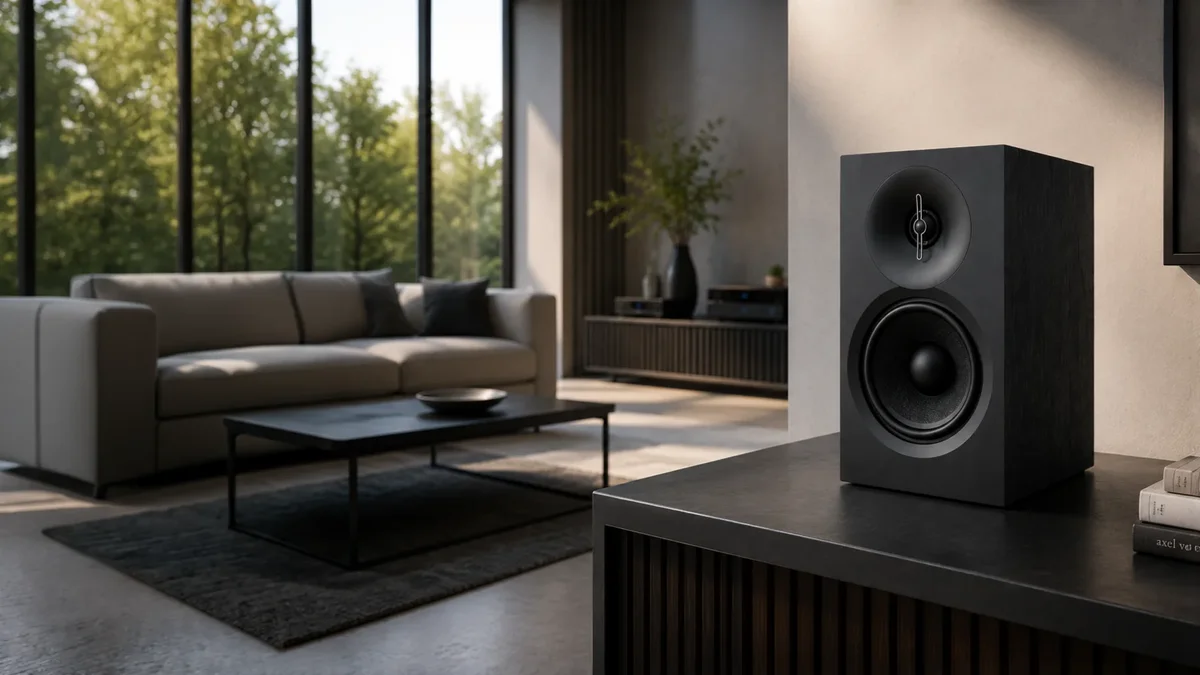
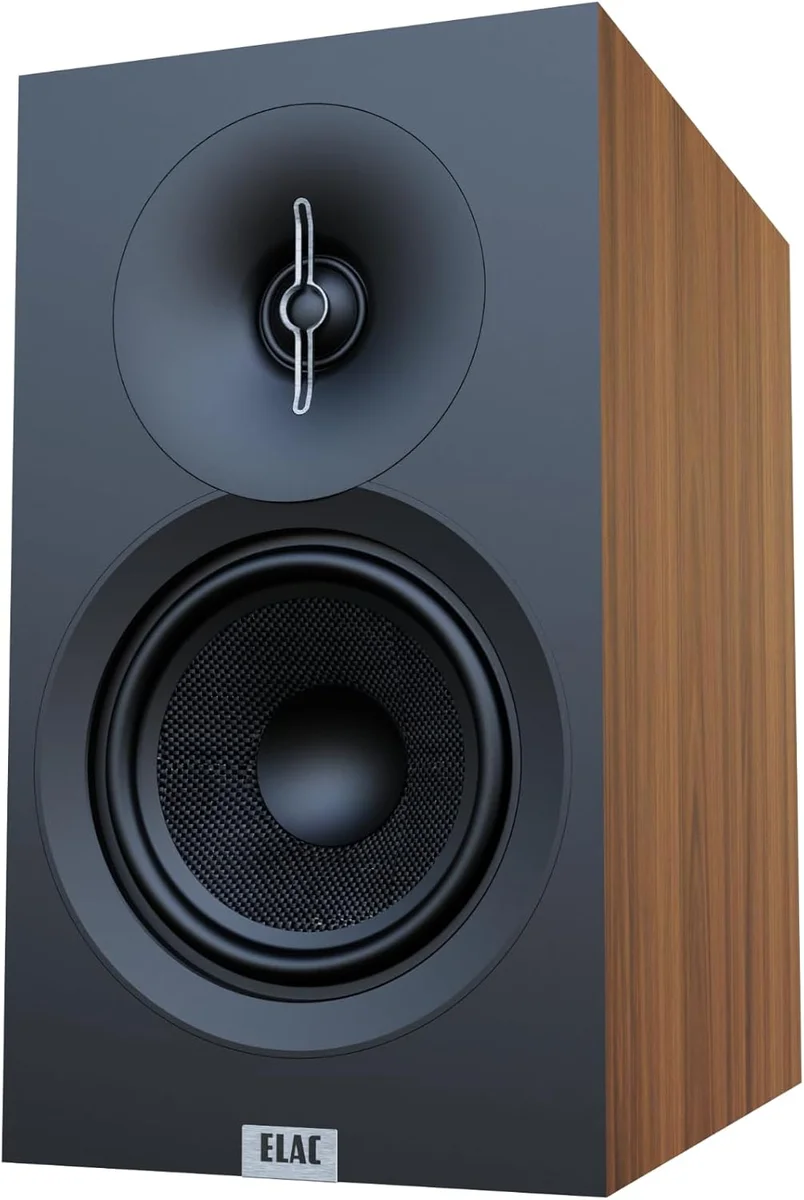
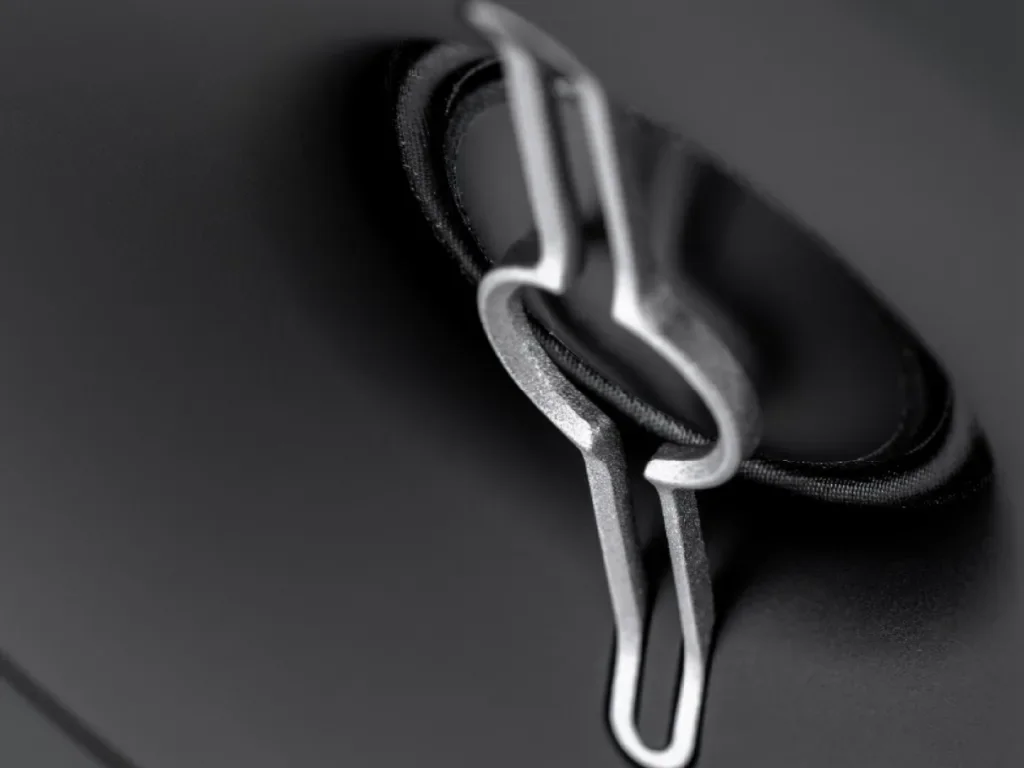
The DB63 inherits the original Debut series' DNA — Andrew Jones engineered the first Debut to bring legitimate hi-fi performance to a sub-$500 price tag, and ELAC has spent three generations refining it. The 3.0 iteration adds a custom 1-inch aluminum dome tweeter and a newly engineered 6.5-inch aramid-fiber woofer that pushes useful bass extension to 42 Hz — deeper than the Klipsch RP-600M II at less than 60% of the price.
For first-time hi-fi buyers building a system on a budget, the DB63 plus a $300 Yamaha A-S301 or NAD C 316BEE V2 integrated amp creates a stereo system that punches well into the $1,500 range for under $800 total. ELAC's 7-year warranty closes the deal — Polk and Klipsch offer 5 years on competing models.
What It Won't Do
The DB63's biggest practical limitation is footprint. At 339 × 195 × 298 mm, the cabinet is noticeably larger than the Polk ES20 or the Klipsch RP-600M II — not a desktop speaker. JPK explicitly flagged this for tight desk or wall-shelf placements. If your shelf depth is under 12 inches, measure twice before committing. The DB63 is also strictly passive — there's no built-in DAC, Bluetooth, or HDMI input. Buyers who want a complete plug-and-play system without a separate amplifier should look at the Fluance Ri71 instead. And while the vinyl wood-grain finish is acceptable for $499, it's visibly less premium than the lacquered KEF Q Concerto Meta or AE300 Mk2's matte coats — a meaningful aesthetic gap that becomes obvious side-by-side.
Who Should Buy Which
Acoustic Energy AE300 Mk2
What Hi-Fi?'s #1 bookshelf speaker for 2026 — a paper-cone and fabric-dome standmount that outperforms rivals at twice the price
- First-time serious stereo buyers building a $1,500-$3,000 total system — the AE300 Mk2 is forgiving of mid-tier amplification while still scaling up with better electronics
- Listeners who play across genres and want a speaker that doesn't impose a 'house sound' — What Hi-Fi? specifically praised the AE300 Mk2's tonal neutrality
- Buyers who prioritize British hi-fi engineering and an inert, well-braced cabinet over headline driver gimmicks (metamaterials, AMTs, horns)
- Music-first households where the speakers will spend more time on Spotify, Tidal, and vinyl than on movies
- Anyone who tried the KEF Q Concerto Meta and found it needed more amplifier than they wanted to budget for
ELAC Debut 3.0 DB63
The under-$500 bookshelf speaker reviewers agree on — Crutchfield and JPK both rank it best-in-class for sub-$500
- Vinyl enthusiasts wanting warm, textured playback under $500 — Crutchfield reviewers specifically called the DB63 'a perfect vinyl companion'
- First-time hi-fi buyers building a complete sub-$1,000 stereo system — pair with a Yamaha A-S301 ($300) or NAD C 316BEE V2 ($380) integrated
- Buyers who want the deepest bass at the budget tier — the 6.5-inch aramid-fiber woofer hits 42 Hz, deeper than the Klipsch RP-600M II costing $200 more
- Owners shopping for a 7-year warranty — ELAC's coverage is industry-leading at this price
- Listeners who prefer the analytical, detail-forward presentation of an aluminum dome tweeter over Polk's warmer Terylene signature