
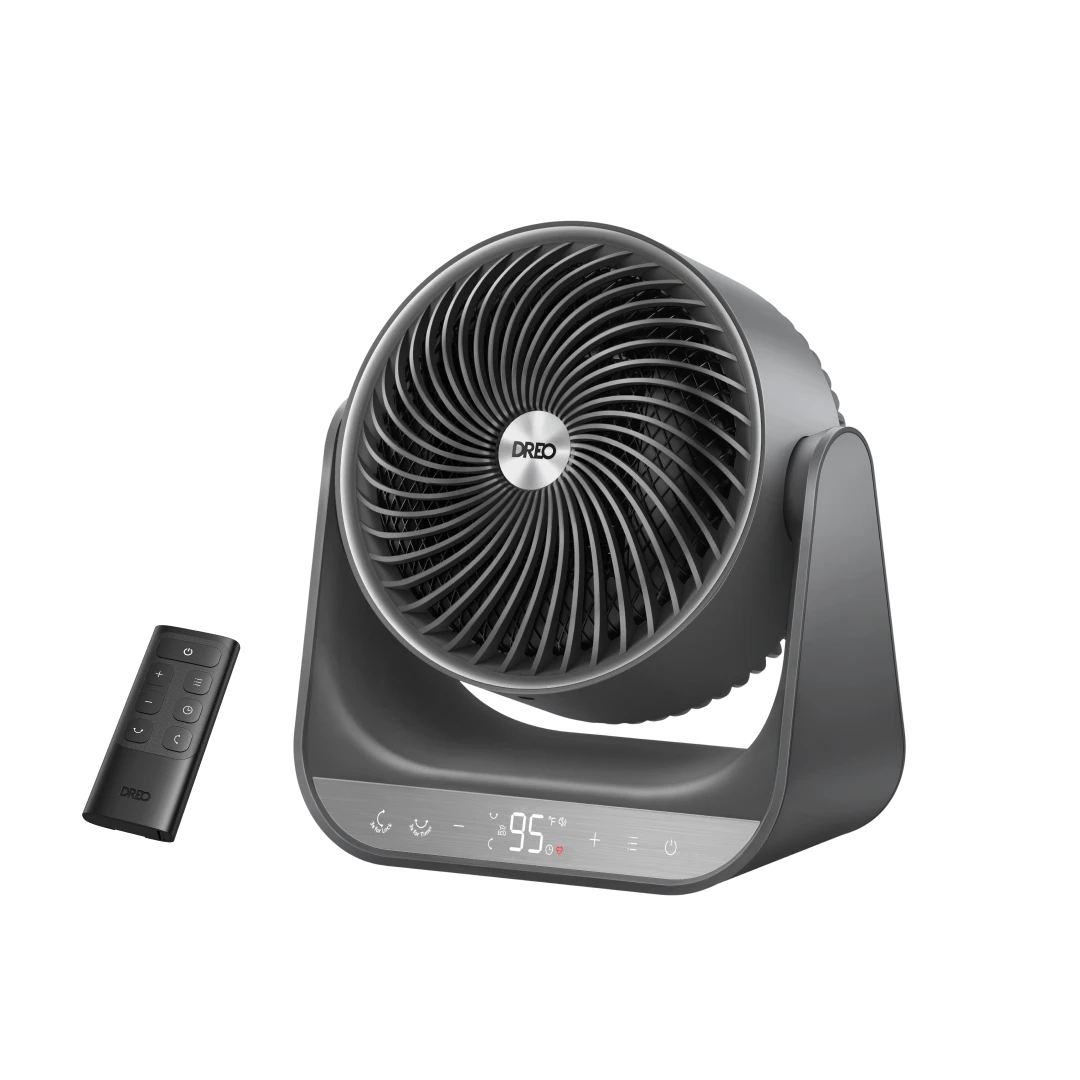
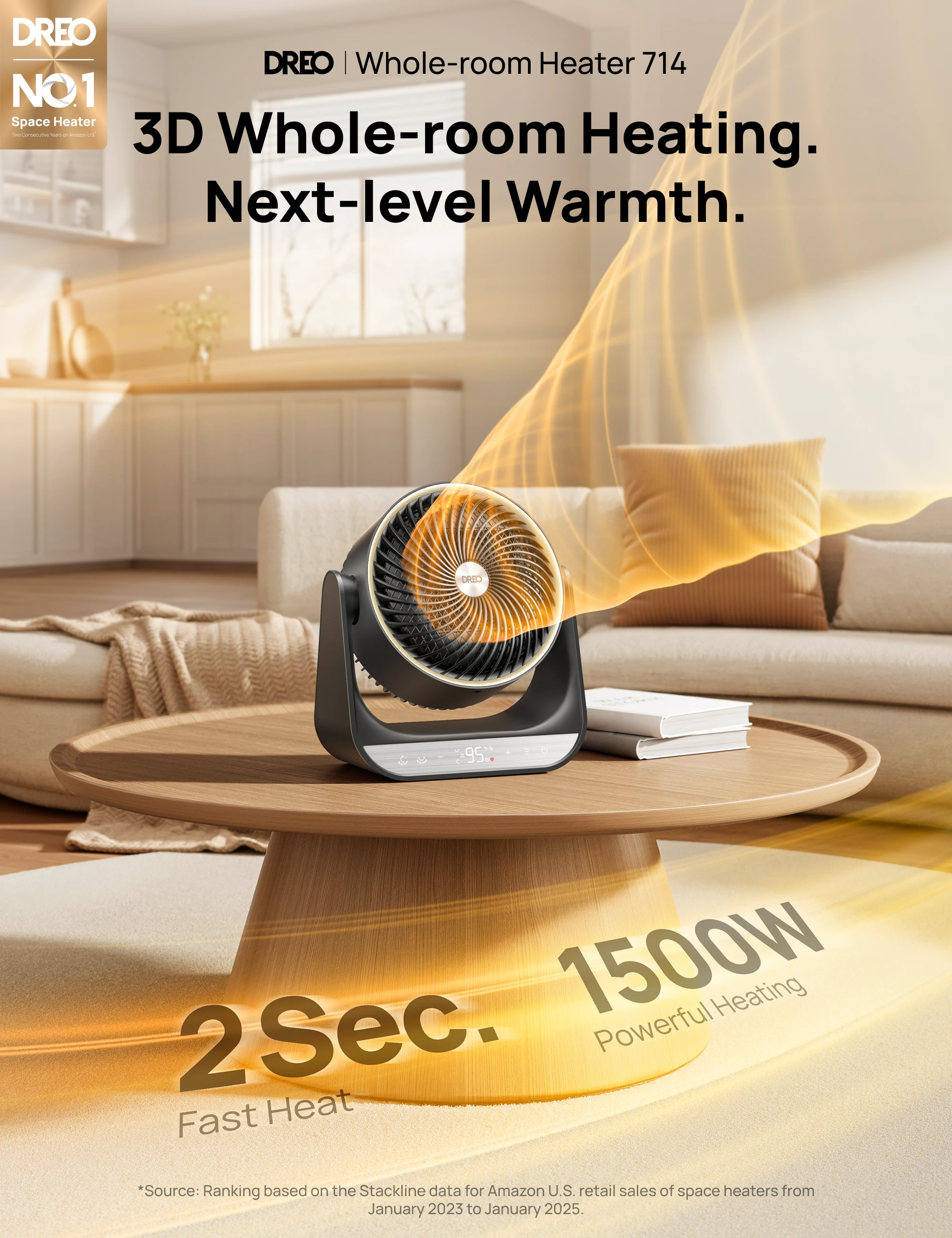
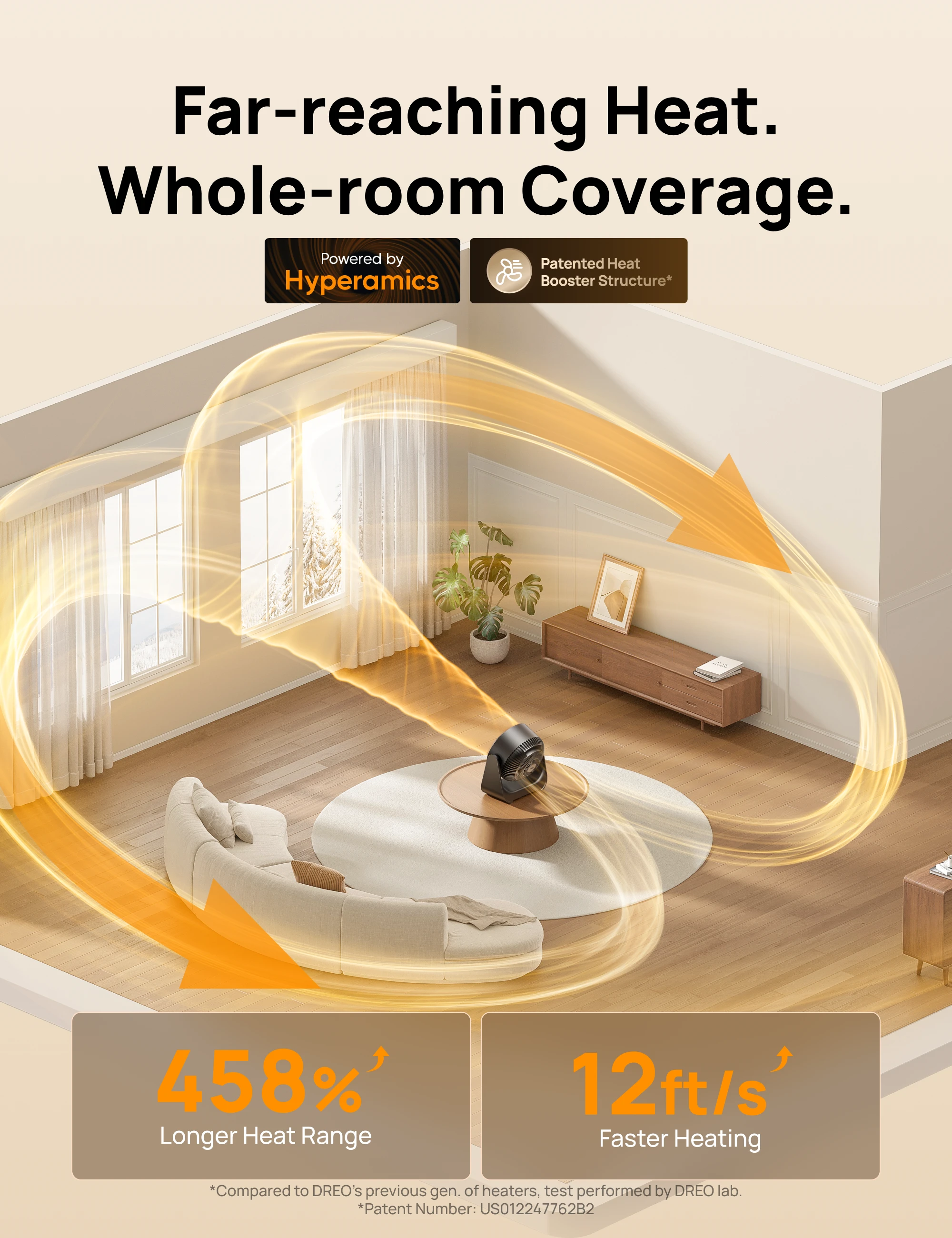
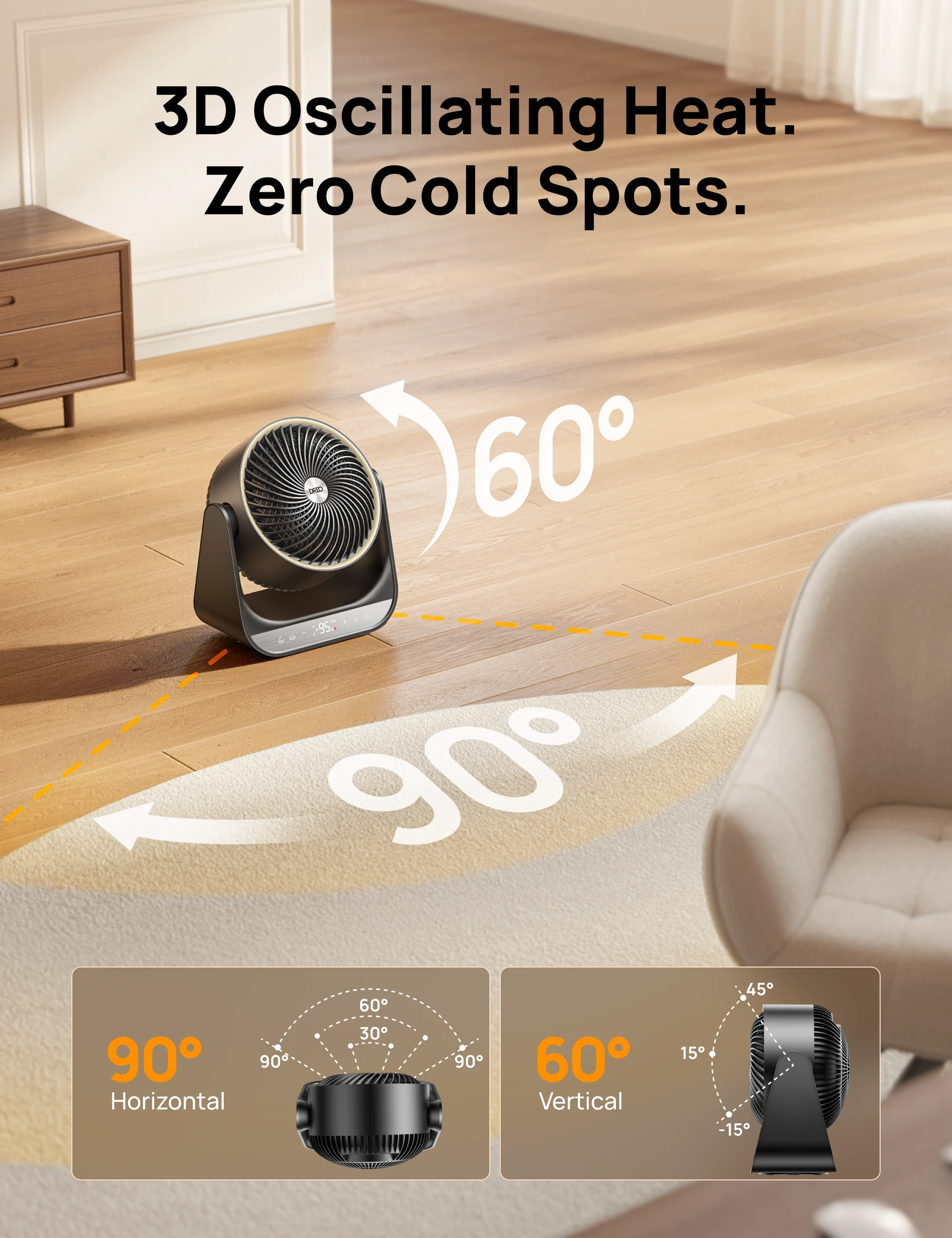
Three things separate the Dreo 714 from a sea of 1500-watt ceramic boxes that all look the same on paper. First, Project Farm's bench tests rank Dreo's safety platform at the top of the field: overheat shutoff at 190°F (the lowest threshold he measured) and a tip-over kill in under a second. Second, TechLine and The French Glow both call out the 714's 3D oscillation — 90° horizontal plus 60° vertical — as the only mechanism in this price tier that actually pulls cold air off the floor and mixes it with hot air, instead of just blowing warmth at one wall. Third, the smart side is genuinely usable: TechLine and Paul Hibbert demonstrate the Dreo app's adaptive Eco-mode saving up to 40% over a fixed setpoint, with Alexa and Google Home both wired in. At $89 (often closer to $100 in stock UK channels) it sits at the entry of the mainstream-premium tier and beats Dyson's $440 AM09 on every metric Stu's Reviews measured except brand prestige.
What It Won't Do
The deep-dish nine-bladed fan is what gives the 714 its room-circulation advantage — and it's also what makes it audibly louder than Dreo's cylindrical Tower 718. Stu's Reviews calls the difference small but real, particularly on max fan speed. If you sleep with a heater running in the same room and even a faint white-noise hum keeps you up, the 718 (or the silent Amazon Basics oil radiator) is the better bedroom pick. The wider grill gaps required by the deep-dish design also create a theoretical risk for toddlers — narrower than any human finger, but worth noting if you have small kids.
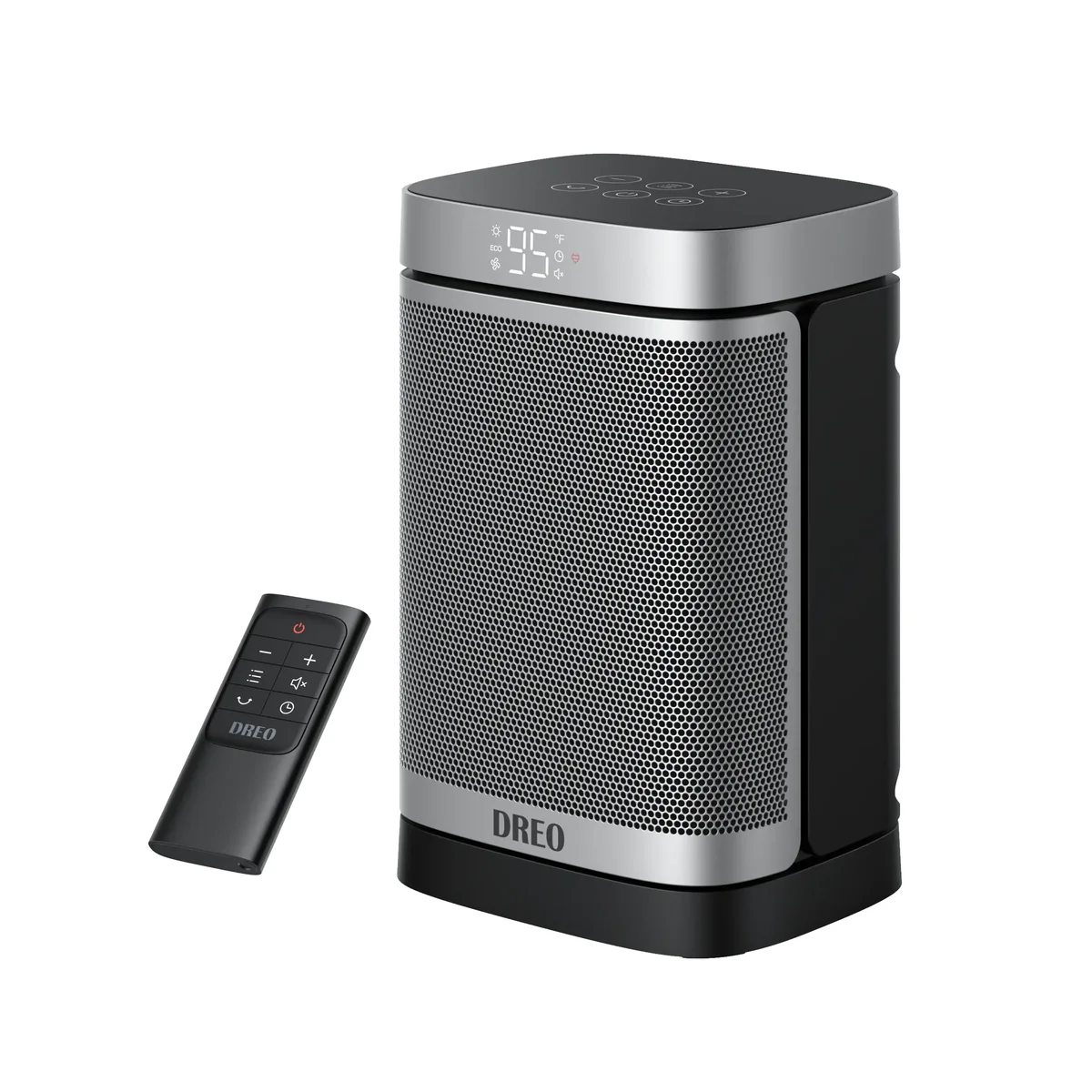
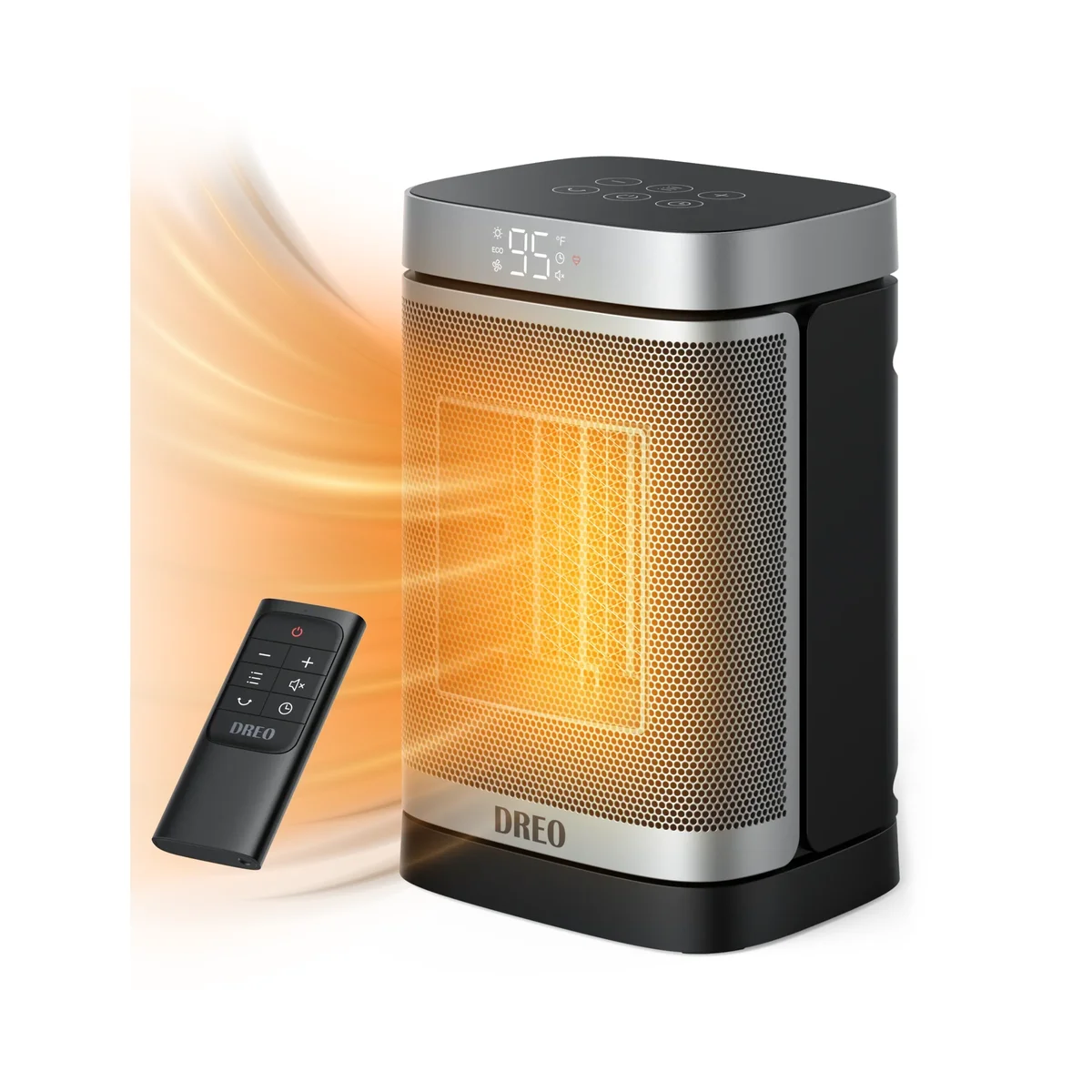
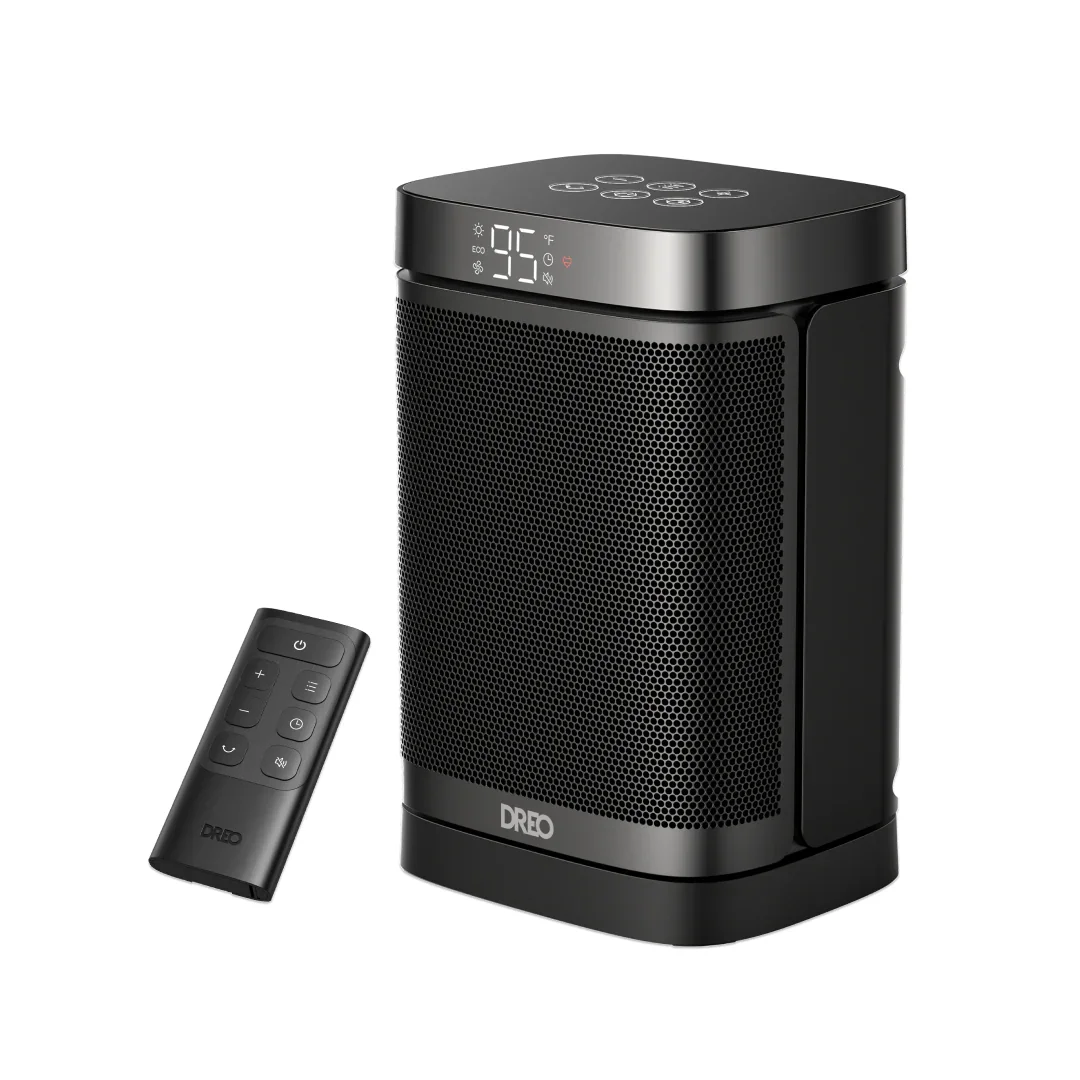
The Atom One is the heater that justifies the floor of Dreo's product line. Project Farm pulled it onto his test bench alongside heaters three times the price and recorded 37.8 dB on low — by far the quietest in his lineup — plus a 1-second tip-over kill and overheat shutoff at 356°F under a smothered pillowcase. At $44 it has the same Hyperceramics core as the 714, the same Dreo app, the same Wi-Fi scheduling, the same digital child lock. The compromise is room size: it's tuned for 200 sq ft, not a living room, and it only oscillates horizontally. For a desk, a nursery, a bedroom, or a small home office, you do not need to spend more. Air Conditioner Lab calculated about 27 cents per hour on full power, dropping further in Eco-mode.
What It Won't Do
Lightweight is a real tradeoff. At 3.86 lb the Atom One topples easier than heavier towers if you bump it with a foot or a vacuum. Dreo's Shield360° platform does kill power within a second of tip-over, but a heavier base would prevent the situation in the first place. The Atom One also doesn't have vertical oscillation, so a cold draft along the floor stays a cold draft along the floor — fine for a 10×10 bedroom, frustrating in a 15×20 living room.
Who Should Buy Which
Dreo 714 Whole Room Heater
3D oscillation, instant-on PTC ceramic, and the most thorough whole-room circulation in its price tier.
- Heats a typical 200-275 sq ft bedroom or living room
- Wants app, scheduling, and Alexa/Google integration
- Values top-tier independently-verified safety testing
- Tolerates a mild fan hum in exchange for true room circulation
- Doesn't have curious toddlers who can reach the unit
Dreo Atom One Space Heater
The whisper-quiet desktop ceramic that beats heaters twice its price on Project Farm's safety bench.
- Heats a small bedroom, home office, or desk area (≤200 sq ft)
- Wants Wi-Fi and child-lock without paying premium-tier prices
- Runs the heater in short, targeted sessions
- Needs near-silent operation under 40 dB
- Has no toddlers who can knock the lightweight unit over