The Best Soundbars
Verified by
 Ryan V. Editor-in-Chief
When you purchase through links on our site, we may earn an affiliate commission.
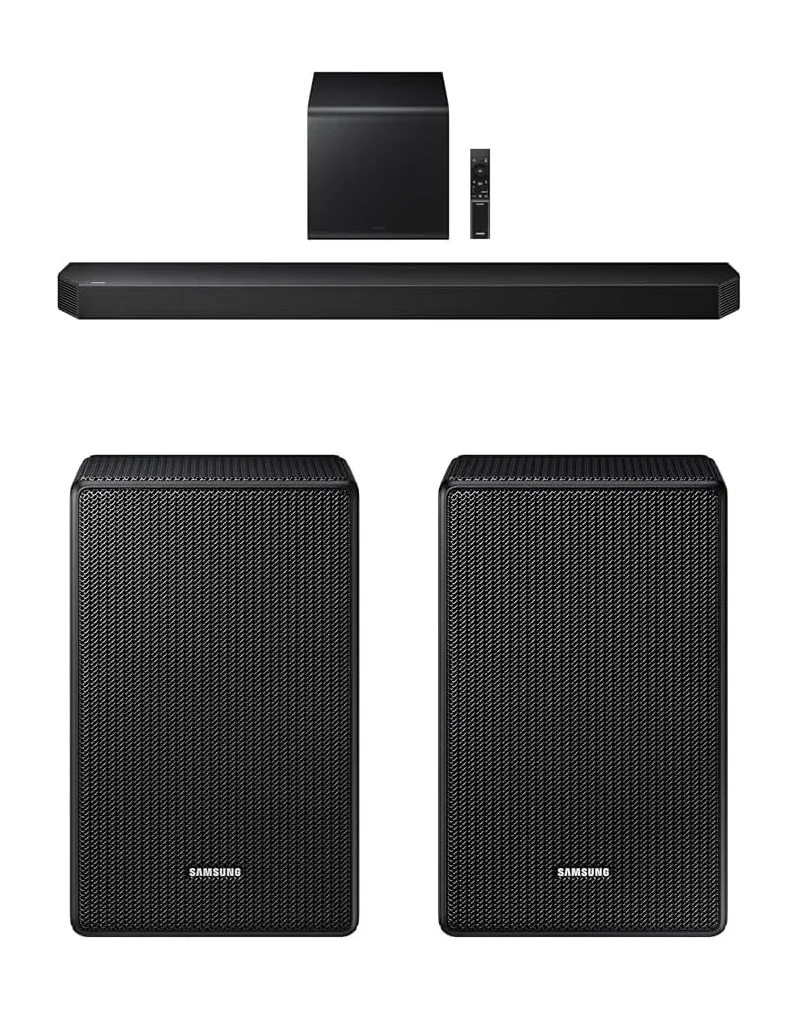
The Samsung HW-Q990F won because no other soundbar system creates a 360-degree Dolby Atmos dome this convincing without ceiling speakers. Tech Legend and Valid Consumer both describe the 11.1.4 layout as a legitimate home theater replacement: 23 drivers across the main bar, two rear satellites with their own up-firing and side-firing transducers, and a redesigned sealed subwoofer that prioritizes control over raw volume.
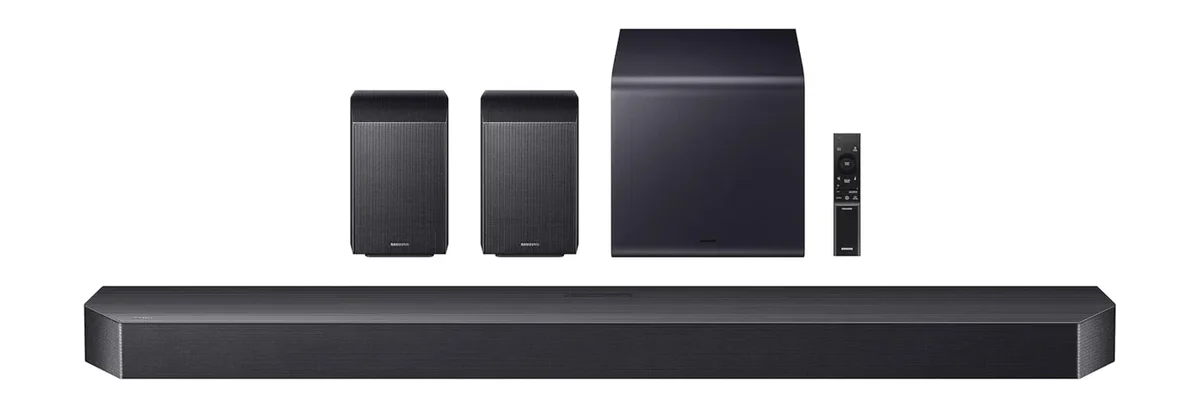
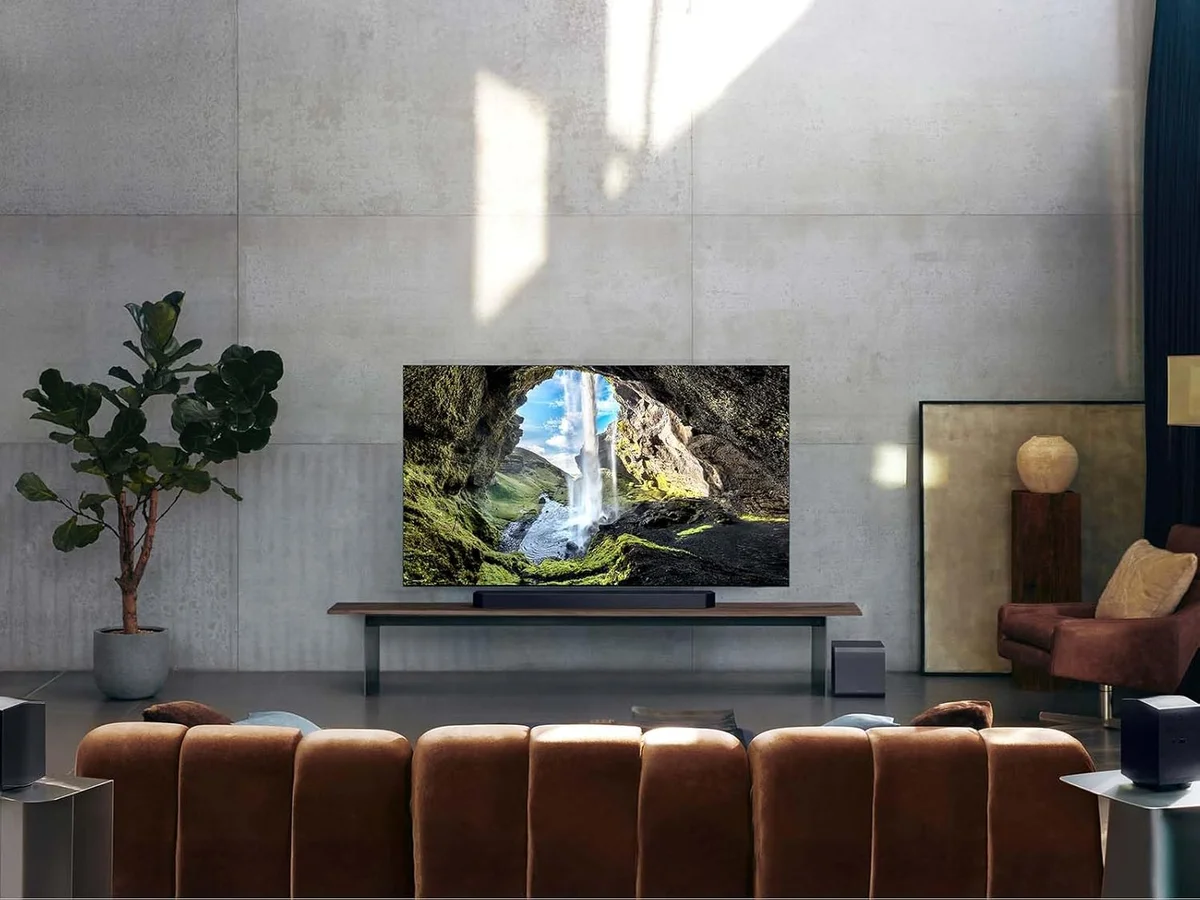
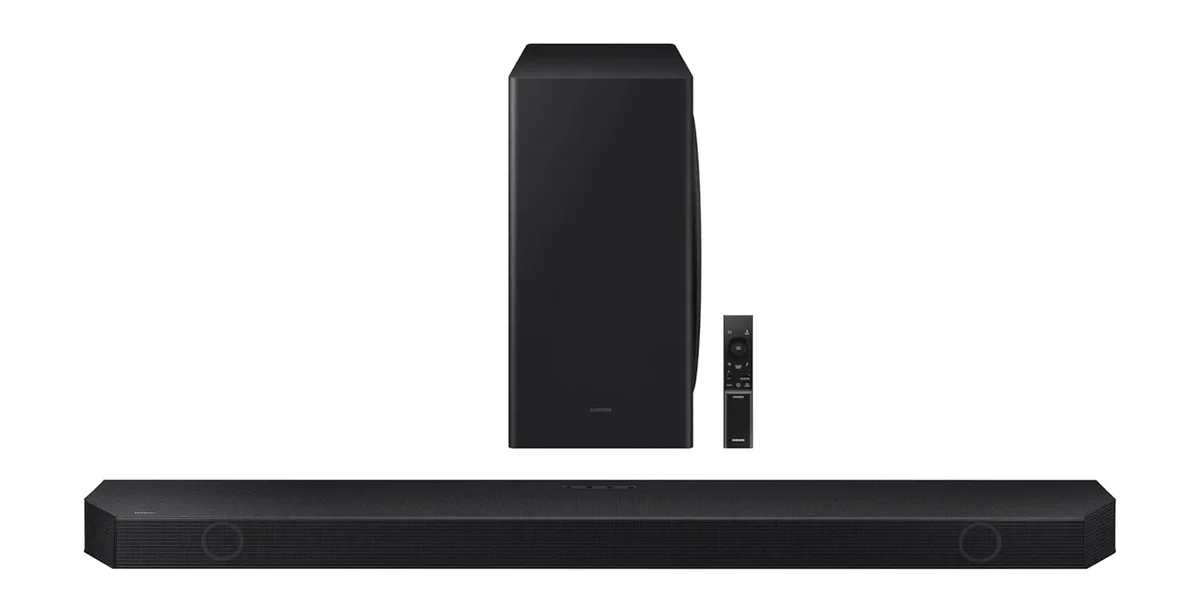
Andrew Robinson and NeverEnoughTech praised the subwoofer's shift to a dual-opposing sealed design. The old ported Q990D sub boomed and bloated in small rooms. The new one delivers linear, tight bass that sits in the mix instead of dominating it. Robinson measured clean response down to about 30Hz before rolloff.
RTINGS highlighted what really separates this system from the Sonos and JBL alternatives: dual HDMI 2.1 inputs with full 4K/120Hz pass-through, VRR, and ALLM. Gamers can plug a PS5 and Xbox directly into the bar and get both spatial audio and lag-free video. SpaceFit Sound Pro auto-calibrates everything to your room using built-in mics, so you skip the 45-minute manual EQ tweaking that the Nakamichi Dragon requires.
Samsung's ecosystem also helps. Q-Symphony syncs the bar with compatible Samsung TV speakers for a wider front stage, and AirPlay 2 plus Spotify Connect cover wireless streaming. The Q990F is the only system here that checks every box: immersion, gaming, streaming, and auto-calibration.
What It Won't Do
The Q990F is barely different from last year's Q990D. RTINGS ran frequency sweeps on both and found nearly identical response curves. Andrew Robinson said he couldn't tell them apart in a blind test. If you spot a Q990D for $200-400 less, that's the smarter purchase. The subwoofer also rattles at extreme volumes: Robinson pushed it past 90dB and heard the sealed cabinet creak and compress. You'll never hit those levels during normal movie watching, but bass-heads who crank action scenes will notice the limit.
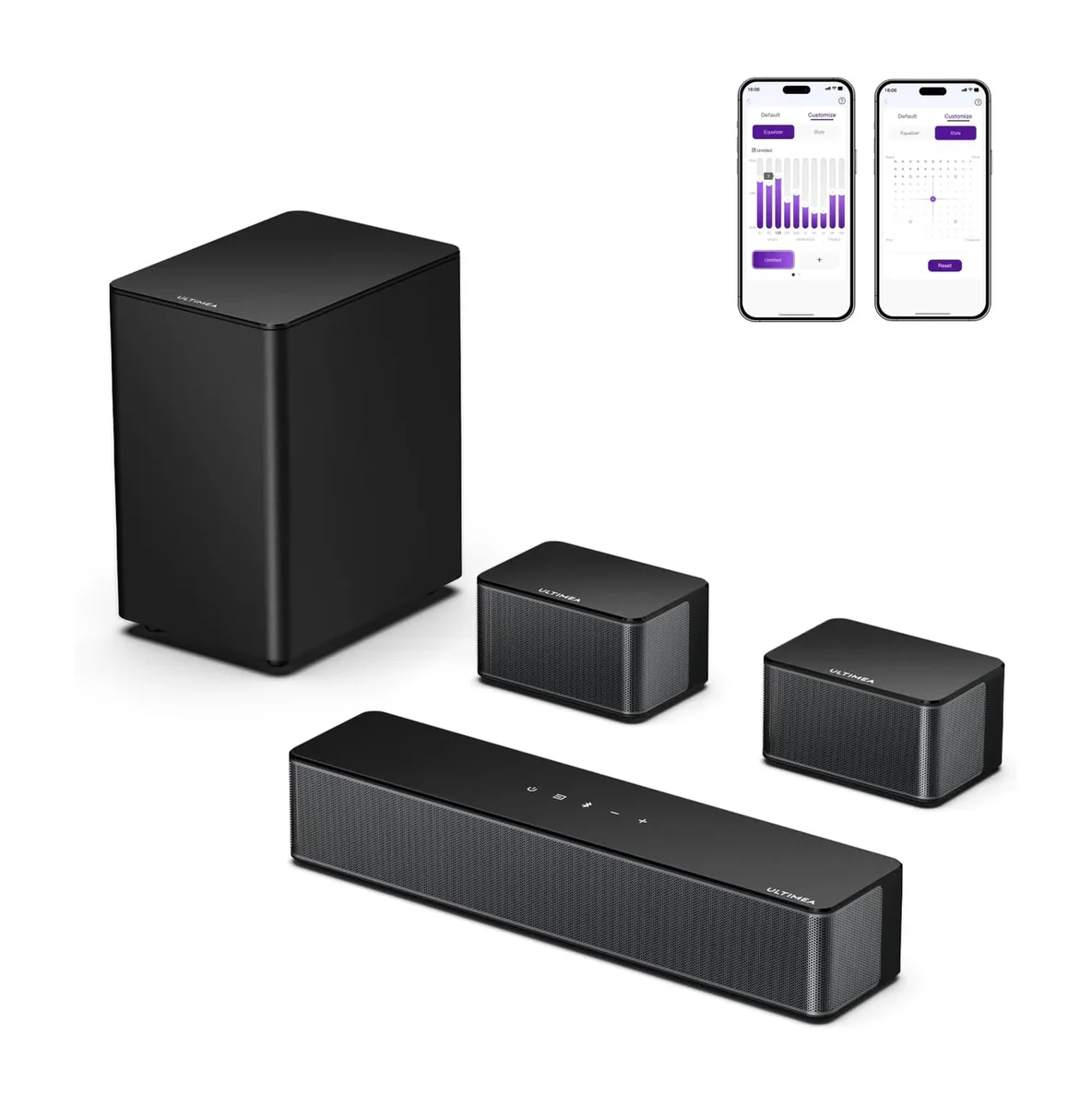
The Hook Up tested 16 budget soundbars under $200 by normalizing volume at 80dB with a 500Hz tone, running frequency sweeps on all 16, and recording audio side-by-side with a Tascam Portacapture X8. The Ultimea Poseidon M60 won that test outright. Where $50-80 bars had harsh treble spikes or hollow mid-range gaps, the Poseidon maintained an even frequency response from 35Hz through 18kHz.
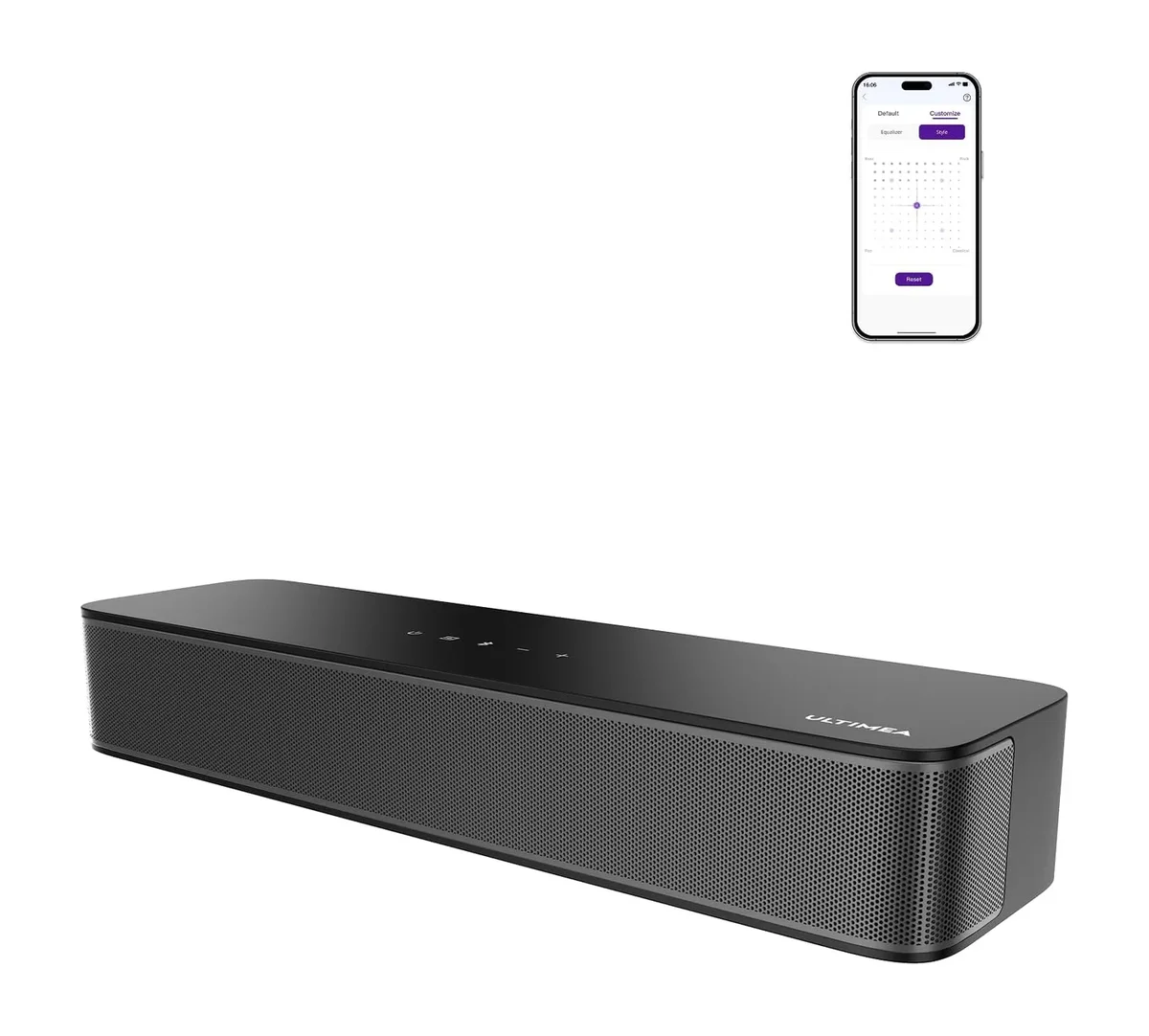
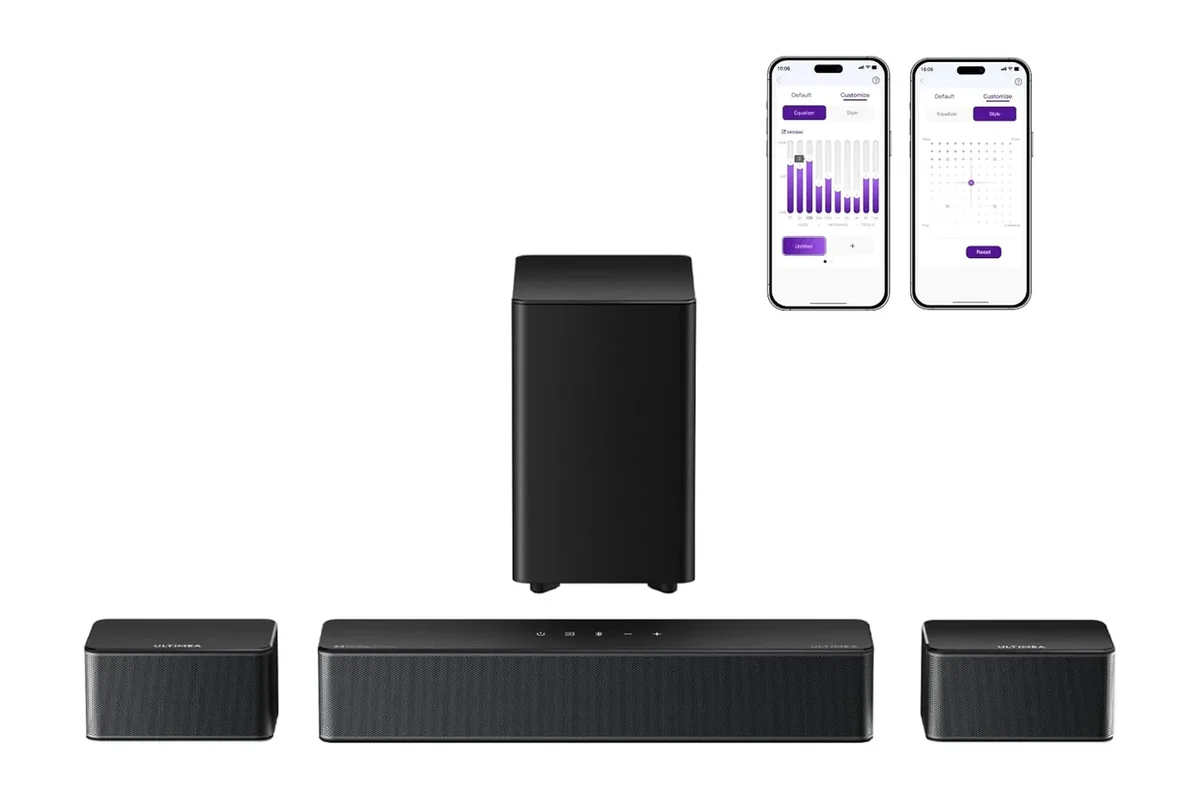
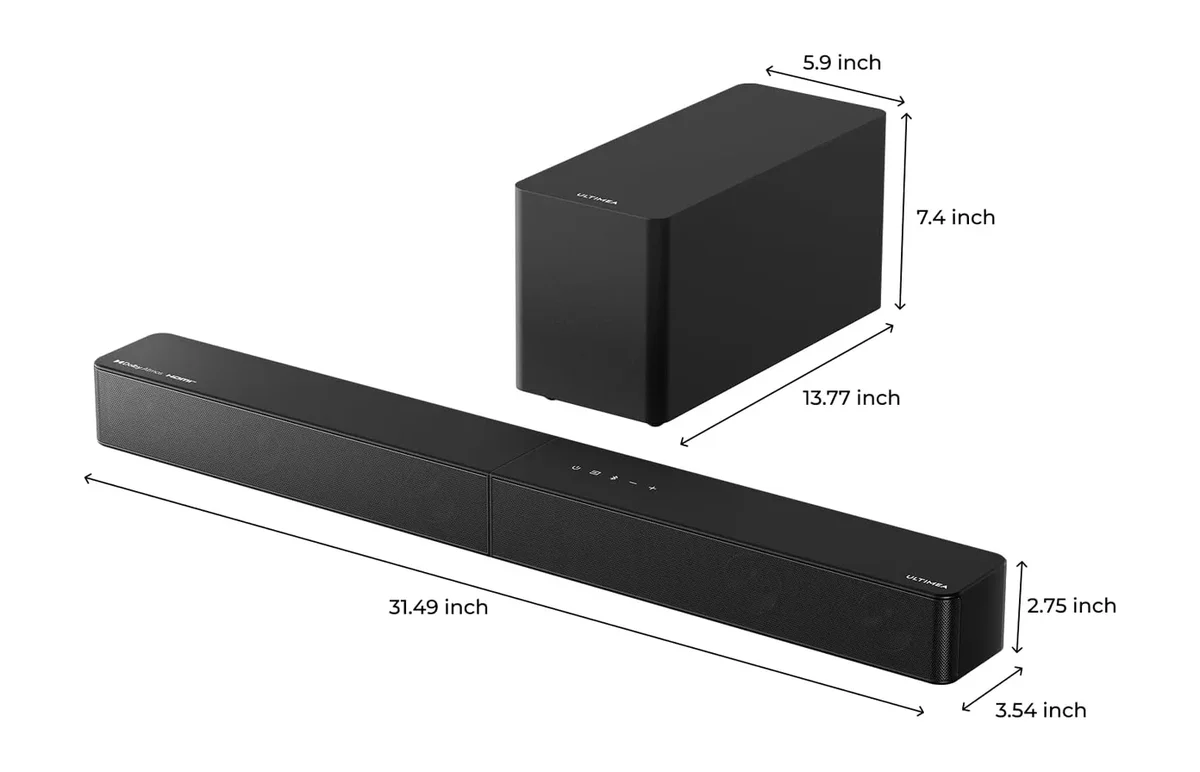
The dedicated center channel is the M60's secret weapon. At this price, most bars blend dialogue into a single forward-facing driver and hope for the best. The Poseidon physically separates vocals into a center position, keeping dialogue intelligible during loud action scenes without cranking a 'voice boost' mode that makes everything else sound thin.
The 5-inch down-firing subwoofer in its wooden cabinet hits 35Hz with tight, clean output. The Hook Up's measurements showed no muddiness or port chuffing at volume. The 10-band EQ through Ultimea's app gives you granular control with 121 presets, which is absurd for a $129 product. Bluetooth latency tested under 120ms in The Hook Up's frame-by-frame sync analysis, so lip sync stays locked during TV watching.
What It Won't Do
The Hook Up confirmed that the 'virtual surround' marketing is complete fiction. They detected zero spatial separation beyond basic stereo left-right panning. Buy this bar expecting stereo plus bass, not surround sound. The wired subwoofer also limits placement flexibility; a 10-foot cable running across your floor is annoying. And Ultimea is a Chinese brand with no track record on long-term reliability or warranty support.
Who Should Buy Which
Samsung HW-Q990F
The 11.1.4 home theater in a box that gamers and movie buffs never knew they needed
- Home theater enthusiasts with medium-to-large rooms who want true 11.1.4 Dolby Atmos without installing ceiling speakers
- PS5/Xbox Series X gamers who need HDMI 2.1 pass-through with 4K/120Hz, VRR, and ALLM directly through the soundbar
- Samsung TV owners who want Q-Symphony to sync bar and TV speakers for a wider front soundstage
- Buyers who value SpaceFit Sound Pro auto-calibration over spending an hour manually adjusting EQ settings
- Households that stream music through AirPlay 2, Spotify Connect, or Alexa and want those features built in
Ultimea Poseidon M60
The $129 bar that won a 16-soundbar blind test and made The Hook Up throw out the rest
- First-time soundbar buyers upgrading from terrible TV speakers who want the single biggest audio improvement for under $130
- Bedroom or small room setups where physical surround sound is overkill and clear dialogue matters most
- Buyers who prefer plug-and-play simplicity over Wi-Fi apps and smart speaker ecosystems
- People who watch a lot of dialogue-heavy content (news, dramas, podcasts) and struggle to hear voices on their TV
- Budget-conscious buyers who recognize that $129 buys honest stereo quality, not the fake 'surround' experience the box promises