The Best Stationary Bikes
Verified by
 Ryan V. Editor-in-Chief
When you purchase through links on our site, we may earn an affiliate commission.
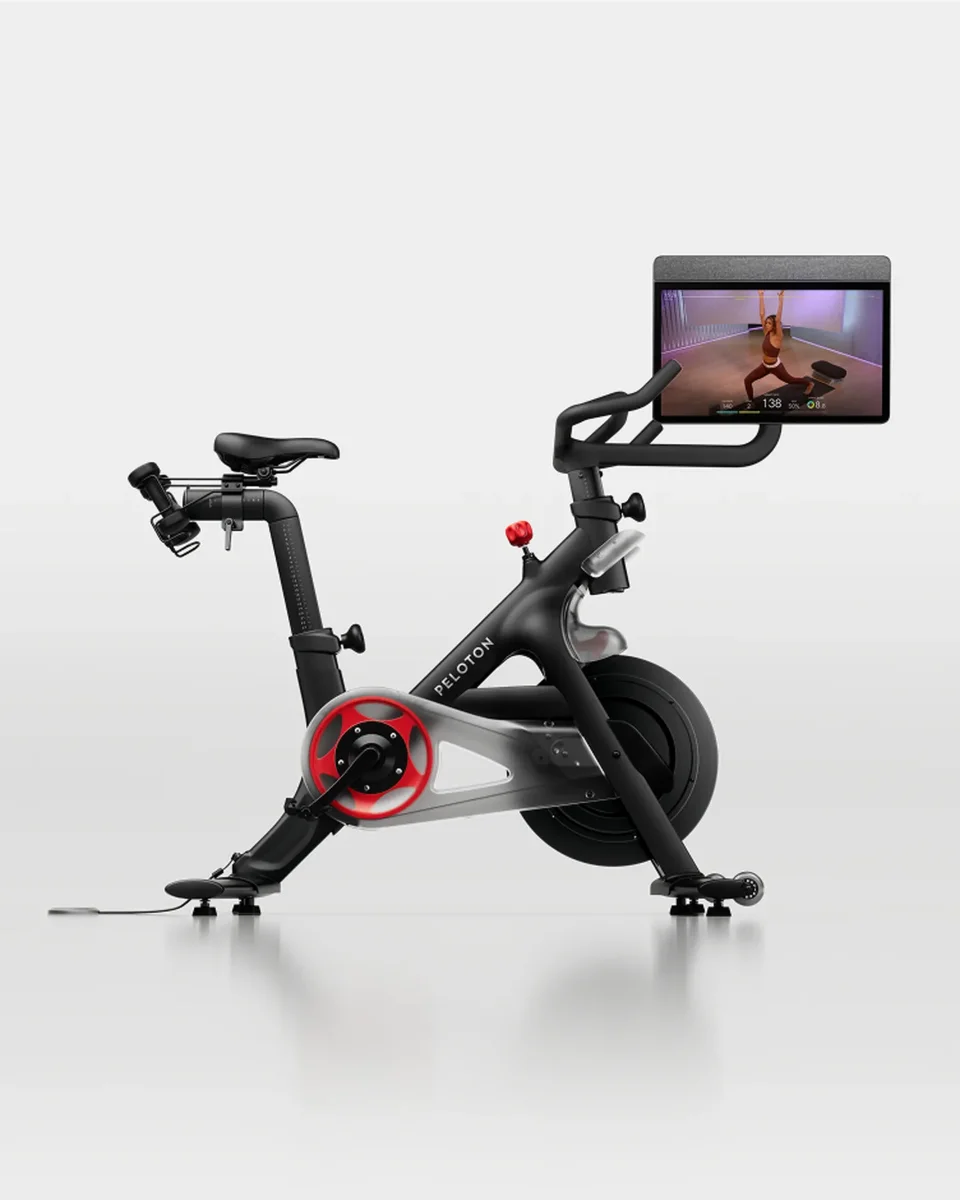
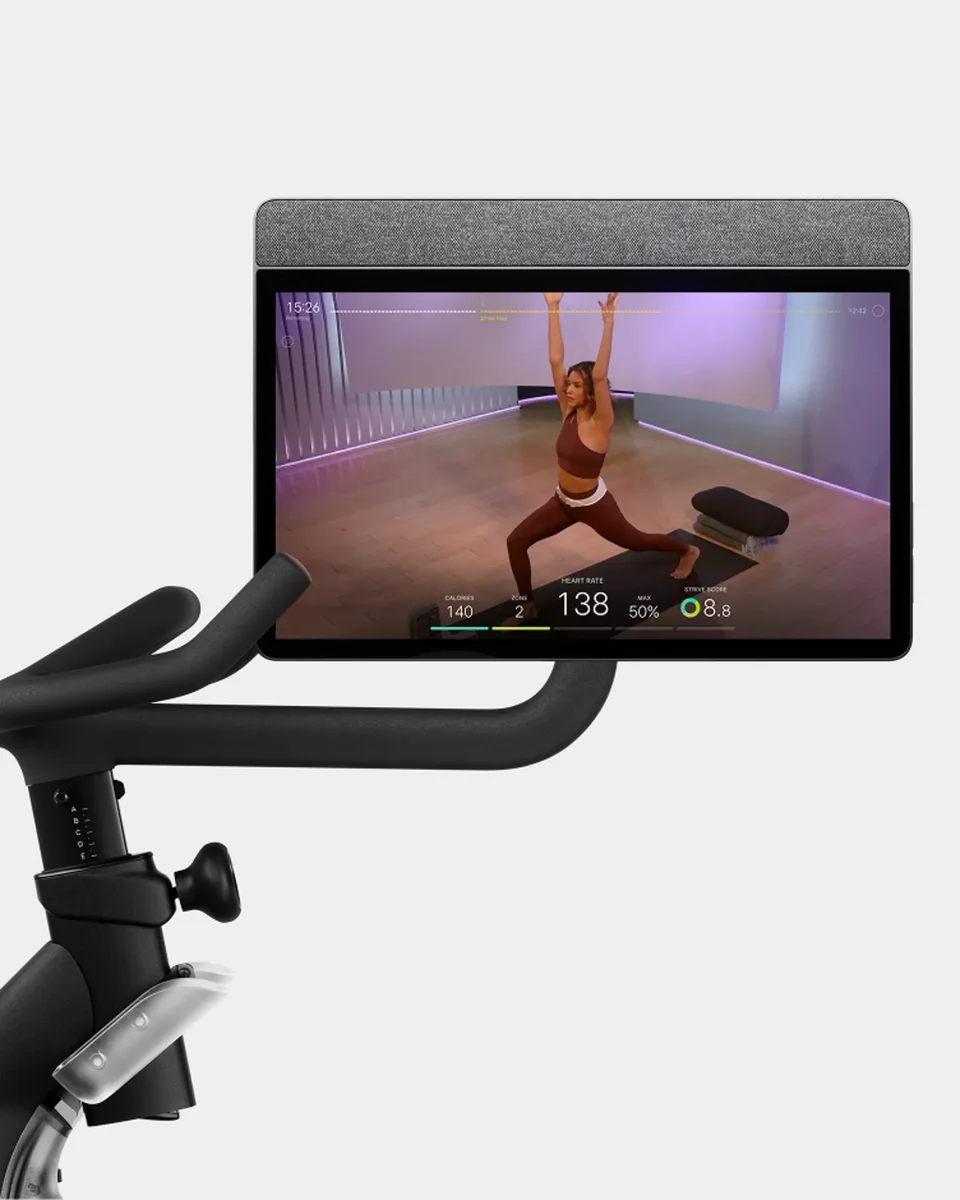
Peloton built the indoor cycling category, and after five years of competitors trying to dethrone it, the original Bike still holds the crown. Garage Gym Reviews put it through half a decade of daily abuse and found zero mechanical degradation. Steve Julien logged 1,200+ workouts on his and says the instructor-led classes, curated playlists, and live leaderboard create a motivation loop nothing else matches.
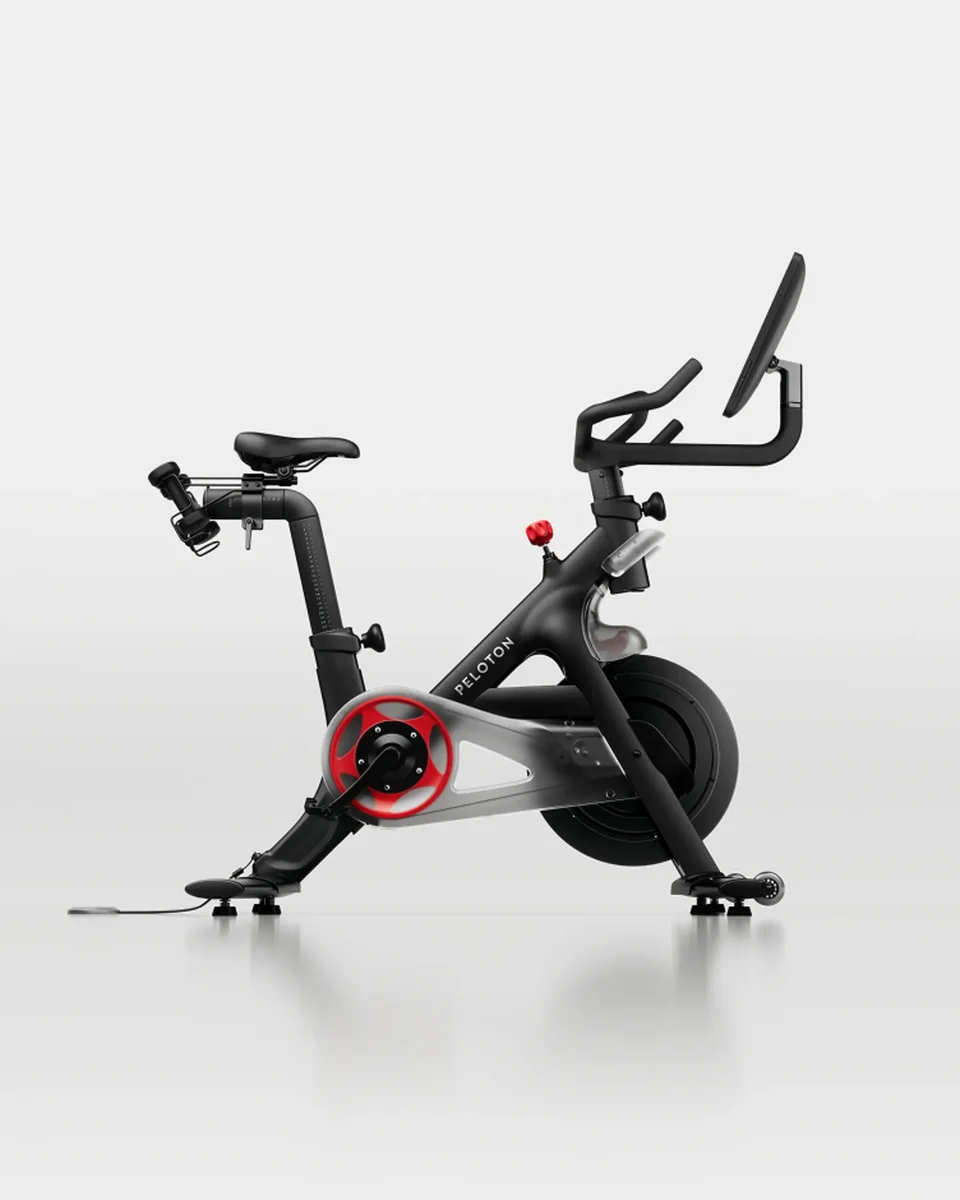
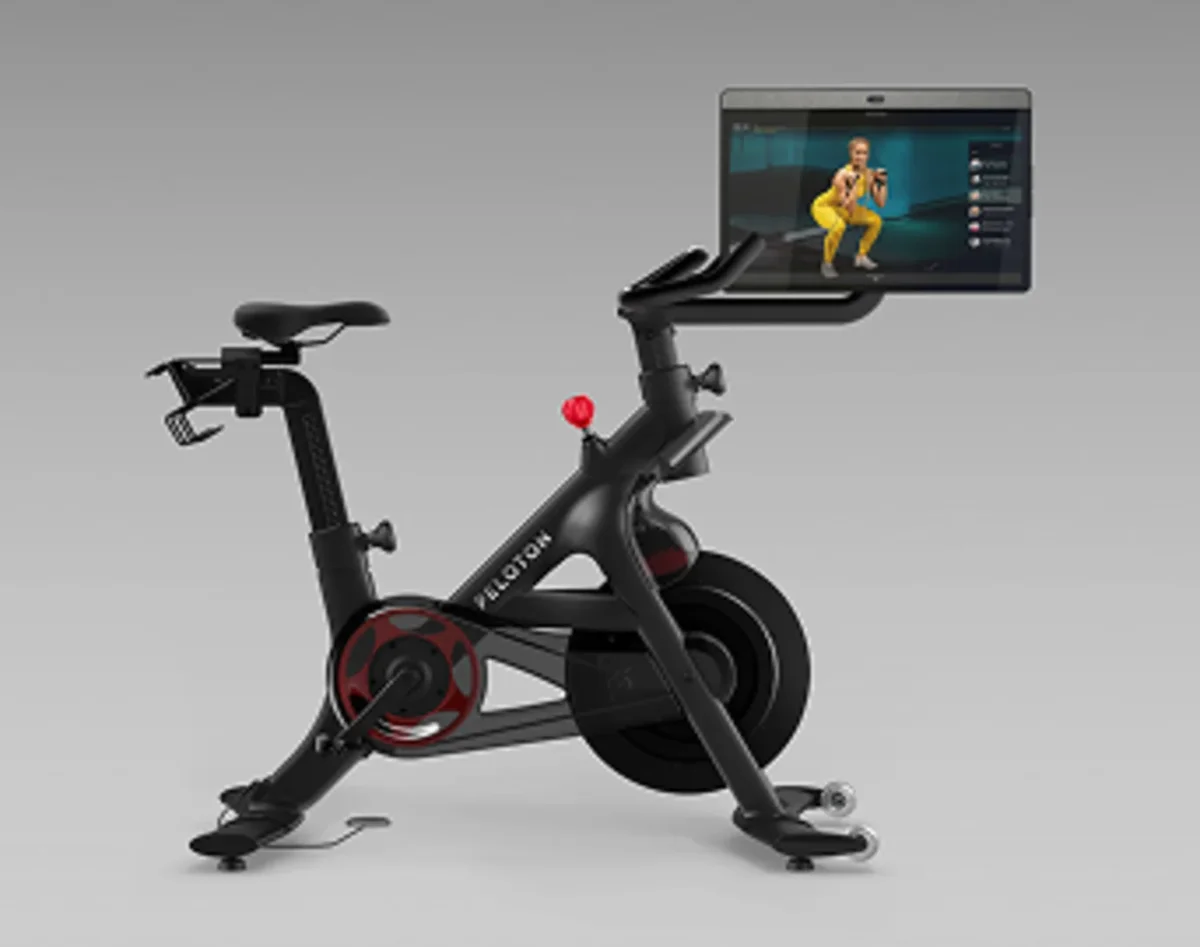
The hardware backs up the software. A 38-lb flywheel paired with 100 levels of silent magnetic resistance produces a ride feel that Product Guide called the smoothest on the market. The welded steel frame handles aggressive out-of-saddle sprints without wobbling.
Peloton rebranded everything as the "Cross Training Series" in October 2025, adding a 360-degree rotating screen and an improved saddle to the base model. The Amazon listing still carries the legacy bike at $1,445 (Peloton.com charges $1,695 for the new version). The $49.99/mo subscription stings, but riders who commit report that it replaces a $150+/mo boutique gym habit.
TreadmillReviewGuru awarded it the "best studio classes" title after testing every major connected bike platform. The audio quality, screen calibration, and instructor engagement are measurably ahead of iFIT and JRNY. For riders who want to be coached, pushed, and held accountable, this is the bike that does all three.
What It Won't Do
The subscription lock-in is real. Without paying $49.99/mo, you own a very expensive coat rack. That's $600/year on top of a $1,445 purchase. Spencer Scott Pugh and Steve Julien both flag this as the single biggest barrier. The stock saddle also needs replacing for most riders (Product Guide and Garage Gym Reviews agree on this), and the Delta-only pedals force you into cycling cleats before your first ride.
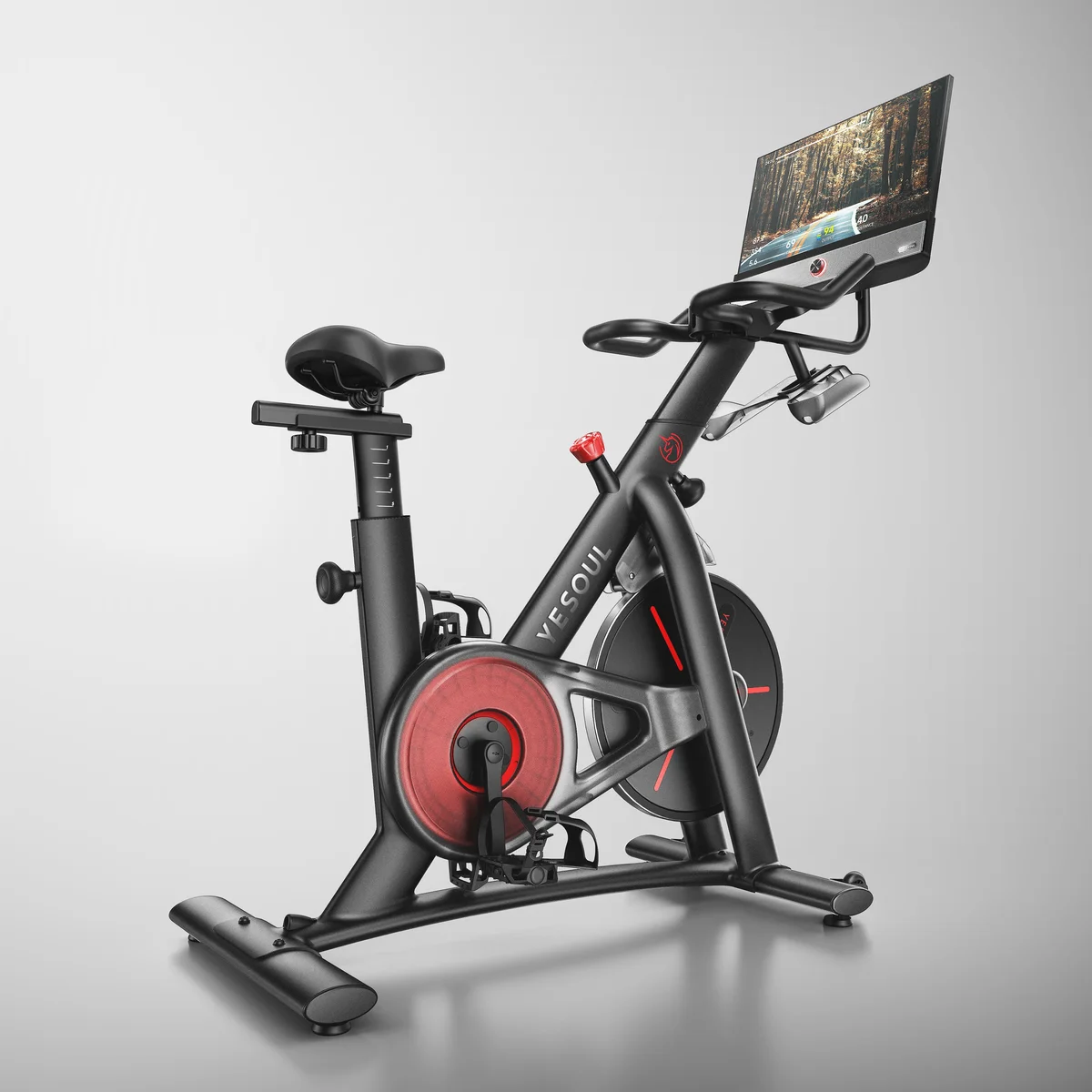
Spencer Scott Pugh called the Yesoul G1M Plus "built like a tank" and couldn't believe it cost $499. Consumer Research Studios confirmed: the welds are clean, the frame is rigid under sprint loads, and the belt drive is practically silent. He rides his a few feet from his sleeping wife.
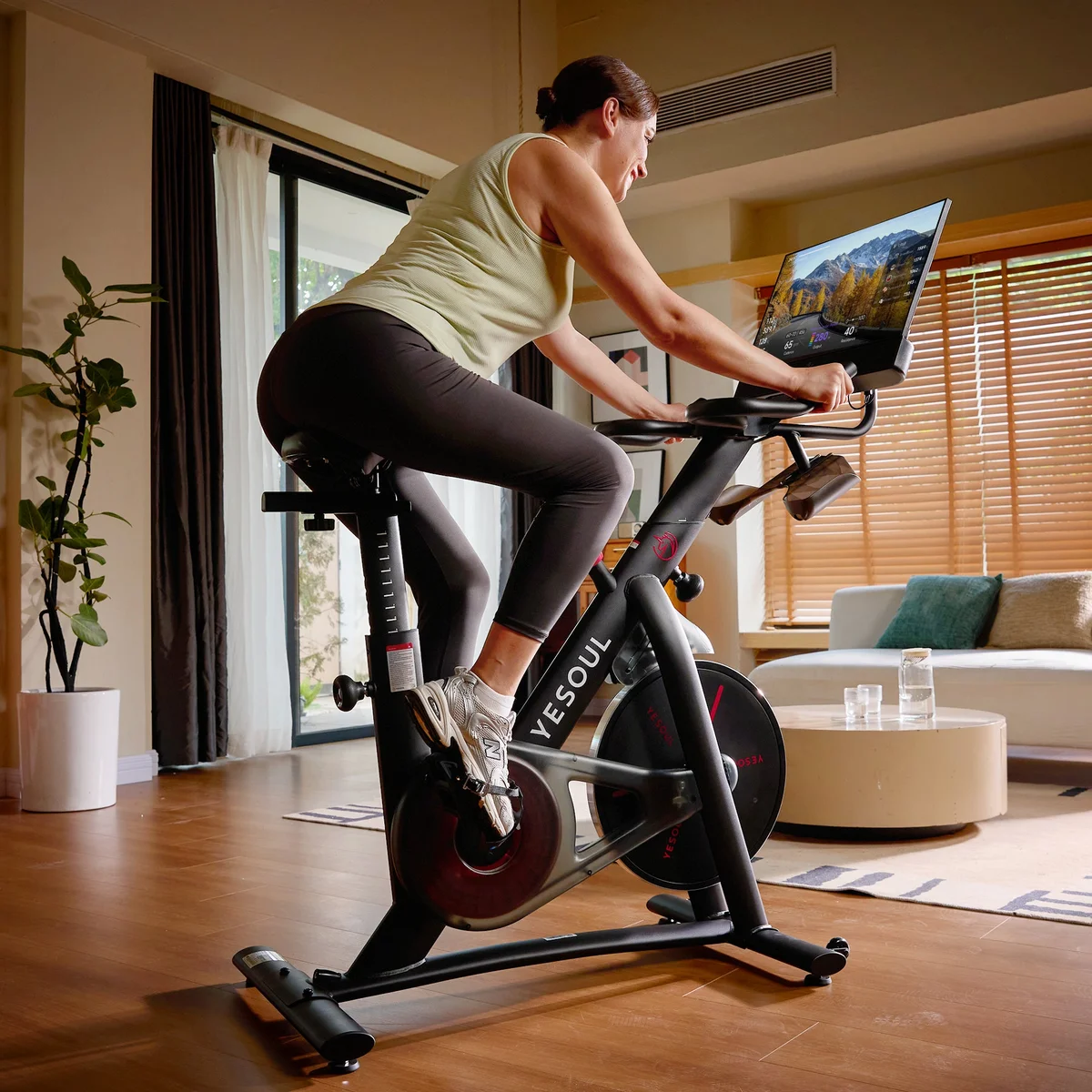
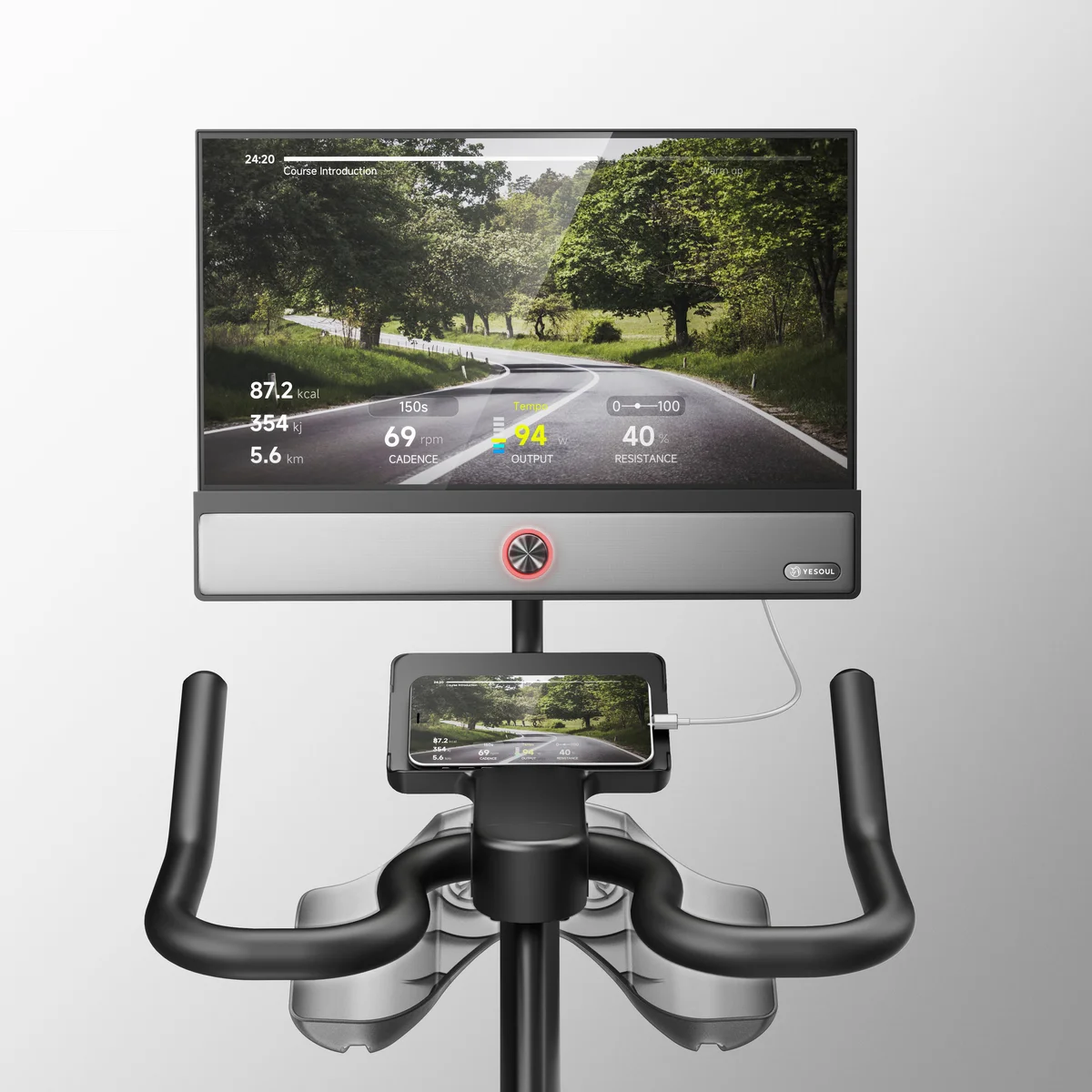
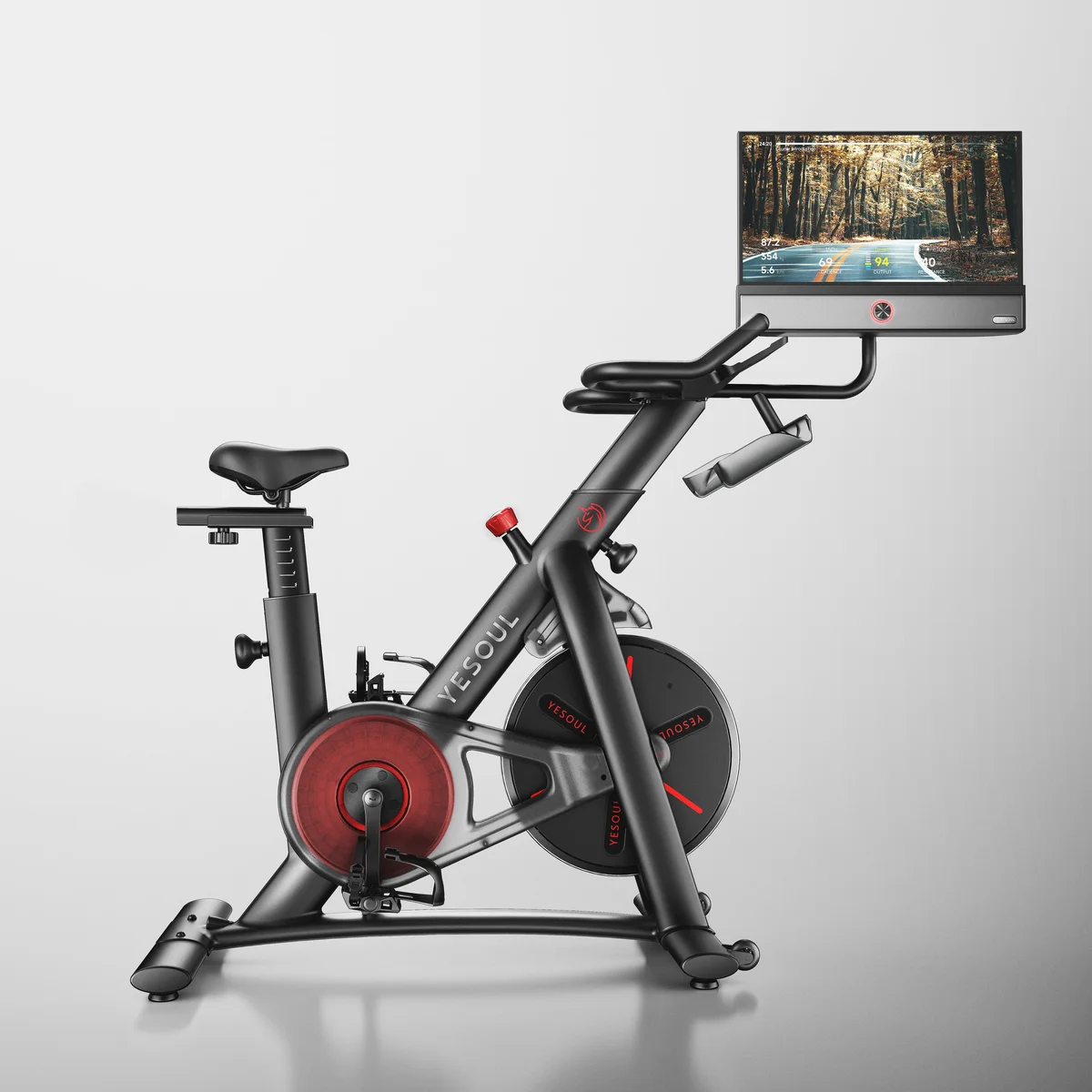
The 21.5-inch 1080P screen rotates 360 degrees (a feature Peloton restricts to the $2,500+ Bike+). It mirrors your phone via wireless casting, so you can watch Netflix, follow a Peloton Digital class at $12.99/mo, or load Zwift for virtual riding. Your workout stats overlay in the corner regardless of what's on screen.
No subscription required. The free Yesoul app has guided rides, and you can pair it with Kinomap, Zwift, or any Bluetooth fitness app. Standard flat pedals mean you ride in regular sneakers from day one.
Clare Walch and Consumer Research Studios both praised the value equation: you get 100 levels of magnetic resistance, a rotating HD display, and zero monthly fees for one-third the price of a Peloton. The Yesoul won't push you through instructor-led intervals the way Peloton will. It gives you the hardware to ride however you want.
What It Won't Do
The screen is a mirror, not a brain. It has no standalone operating system, so everything depends on your phone's Bluetooth connection and casting stability. Spencer Scott Pugh noted this feels less polished than a native app experience. The 265 lb weight capacity is the lowest among the bikes we tested, and Clare Walch found the seat adjustment knob uncomfortably stiff out of the box. Yesoul is also a newer Chinese brand with limited long-term reliability data.
Who Should Buy Which
Peloton Bike
The class ecosystem every other brand is chasing
- You want instructor-led classes with live leaderboard competition
- You're replacing a boutique gym membership ($150+/mo) and want the closest home equivalent
- You ride daily and need a bike that holds up to years of aggressive use
- You prefer a curated music and coaching ecosystem over choosing your own entertainment
- You don't mind budgeting $600/year for the subscription on top of the hardware
Yesoul G1M Plus
Premium hardware at half the Peloton price, no subscription attached
- You want a big-screen bike without any monthly subscription fees
- You prefer watching Netflix, YouTube, or your own content while riding
- You ride in regular athletic shoes and don't want to buy cycling cleats
- You need a quiet bike for shared living spaces or late-night workouts
- Your budget is under $500 and you want the best hardware at that price