
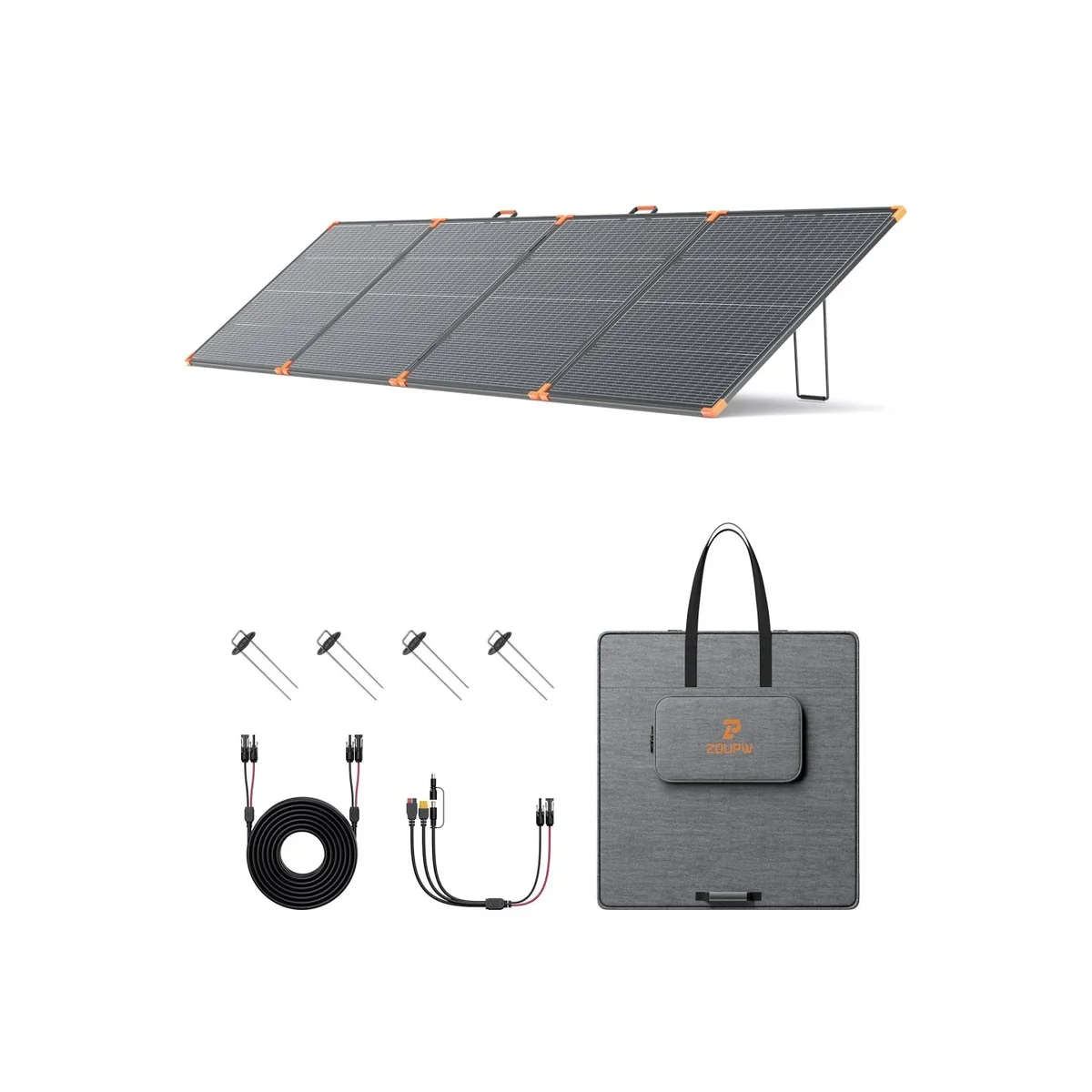
The ZOUPW 480W Bifacial wins because it does the one thing most portable panels fail at: it makes its rated power. ReeWray Outdoors measured a full 480W out of it and watched the number climb past the rating on cold, clear days. Better Together Homestead saw 490W on a cold sunny morning, and Ruby's Adventures Unplugged peaked their version at 446W. Reviewers kept reaching for the same phrase, that it over-delivers, which almost never happens with foldable panels.
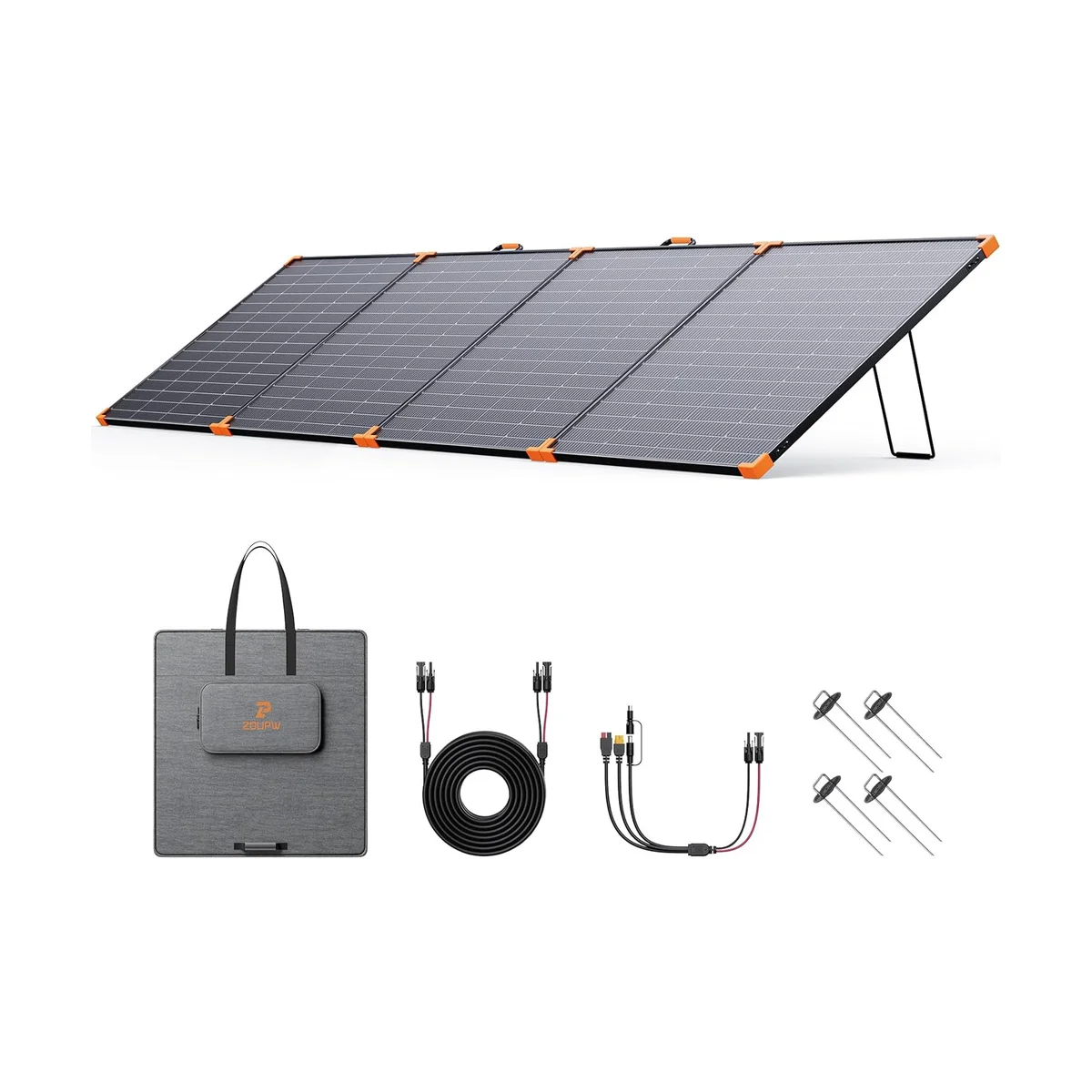
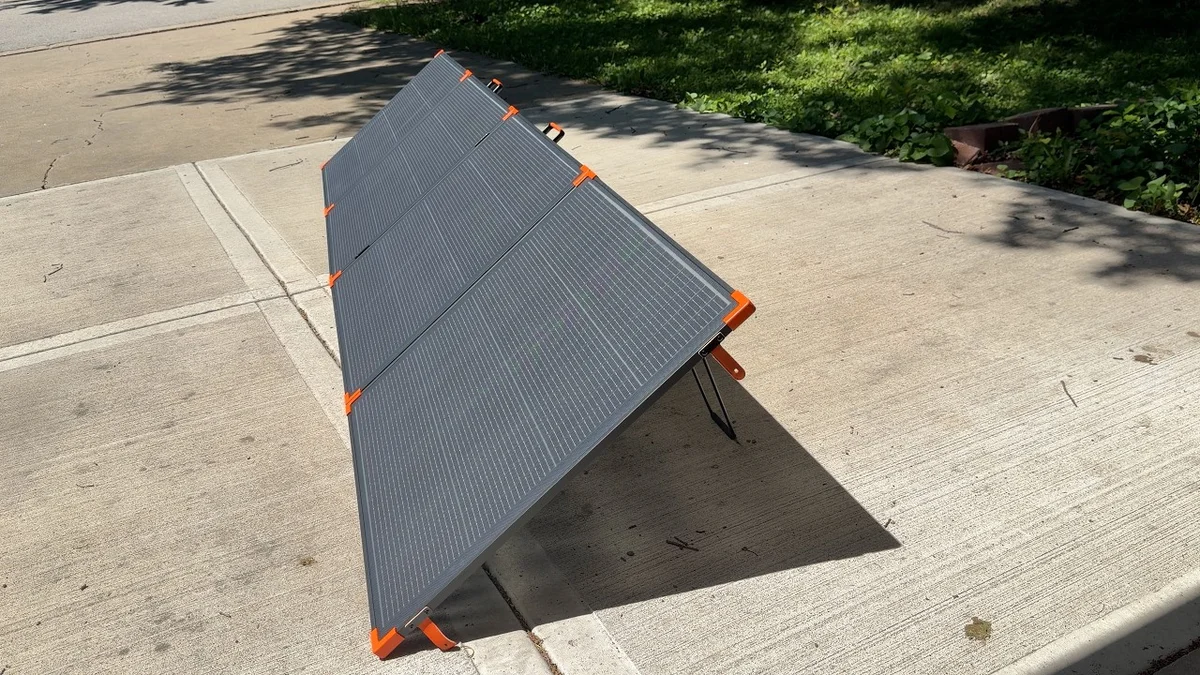
The build is what makes those numbers usable in the field. Instead of a flimsy fabric suitcase, the ZOUPW uses a rigid aluminum frame with legs that hold their own angle. ReeWray timed the full deploy and tear-down at about 30 seconds because there is no Velcro to wrestle and no separate stand to prop up. It ships with a 15-foot MC4 extension and a multi-head adapter that fits XT60, Anderson and DC barrel plugs, so it works with almost any power station out of the box.
At a $599 list price it sits in the mainstream premium tier rather than the prosumer bracket where Anker's SOLIX panels live near $900. You pay more than a bare rigid panel, but you get one that meets spec, sets up in seconds, and comes ready to plug in. For a serious camper or RV owner charging a large power station, that combination is worth the premium.
What It Won't Do
The convenience details are where it shows its price. ReeWray Outdoors flagged the synthetic leather closure straps as cheap-feeling and likely to degrade outdoors, the kind of part you may end up replacing yourself. The kickstands also sit at one fixed angle, so you cannot fine-tune the tilt as the sun moves. And unfolded the panel stretches 11.5 feet, which is a lot of clear ground to find at a crowded campsite.
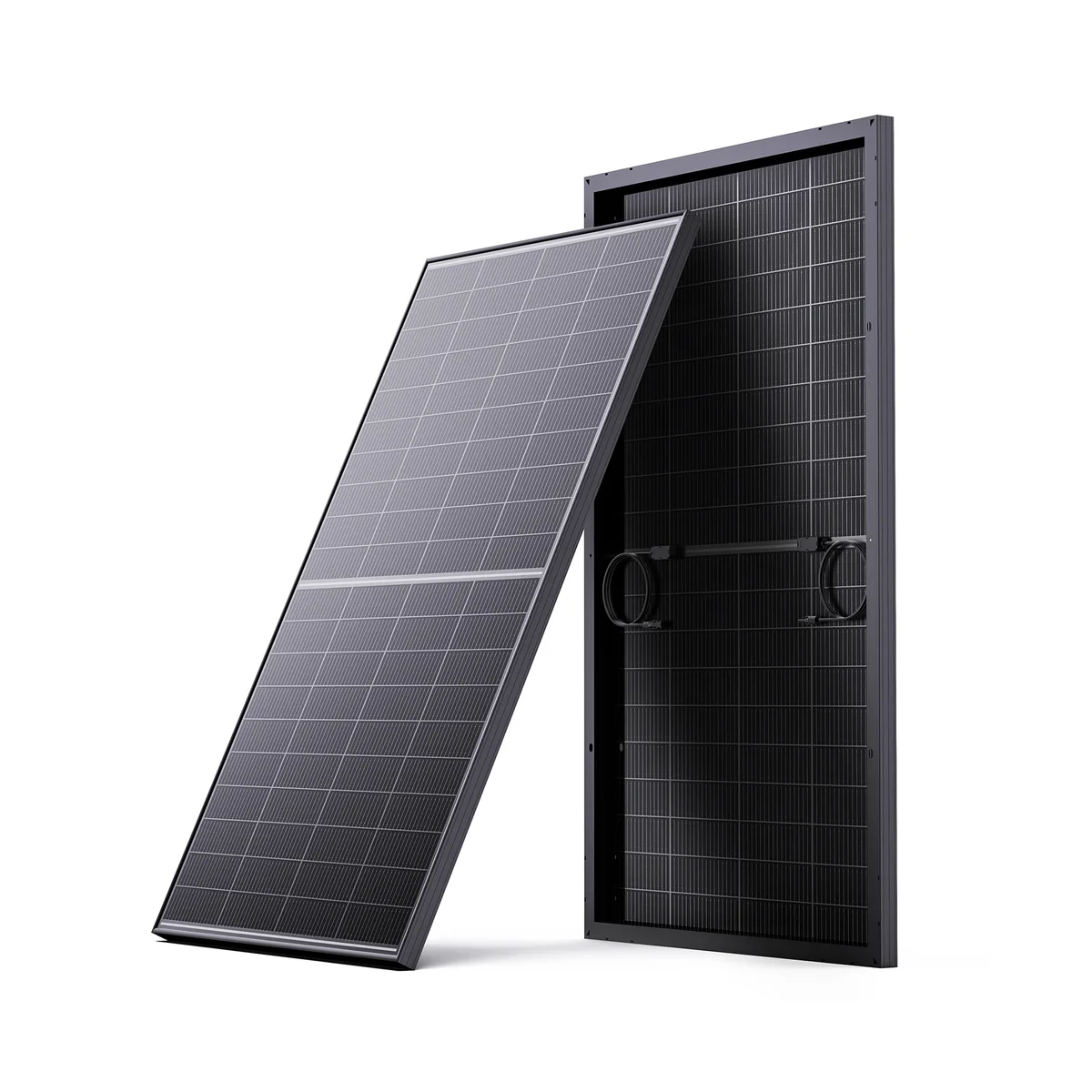
The Callsun 200W Bifacial wins on the only metric that matters to a value buyer: real measured watts per dollar. Gab and Bren ran a head-to-head and calculated 4.3 watt-hours per dollar, 61% more power for the money than a Renogy panel. There's A Trick For That pulled 163W from a single panel and 338W from a pair wired in series, and Minute Man Solar leaned two against a fence and got 378W.
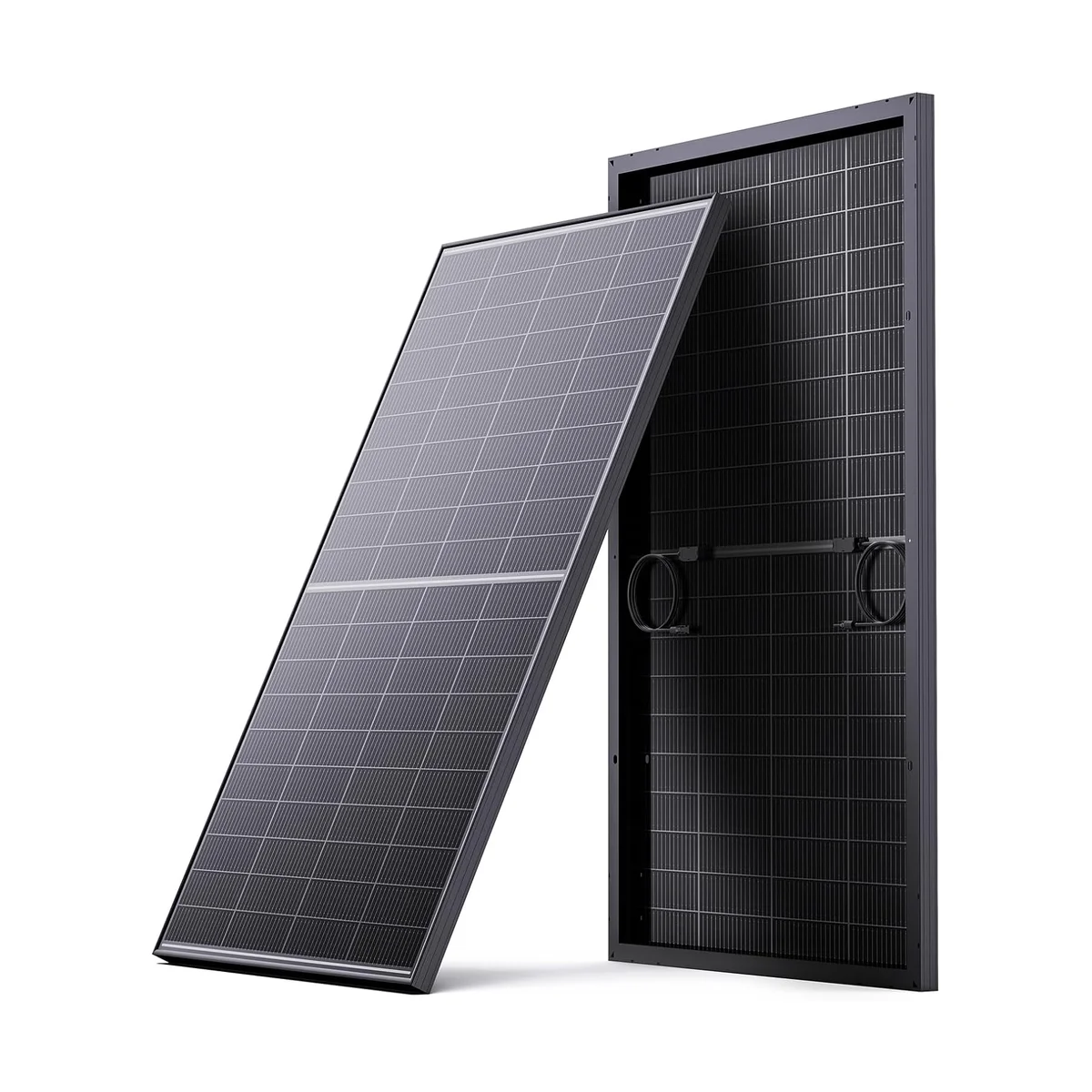
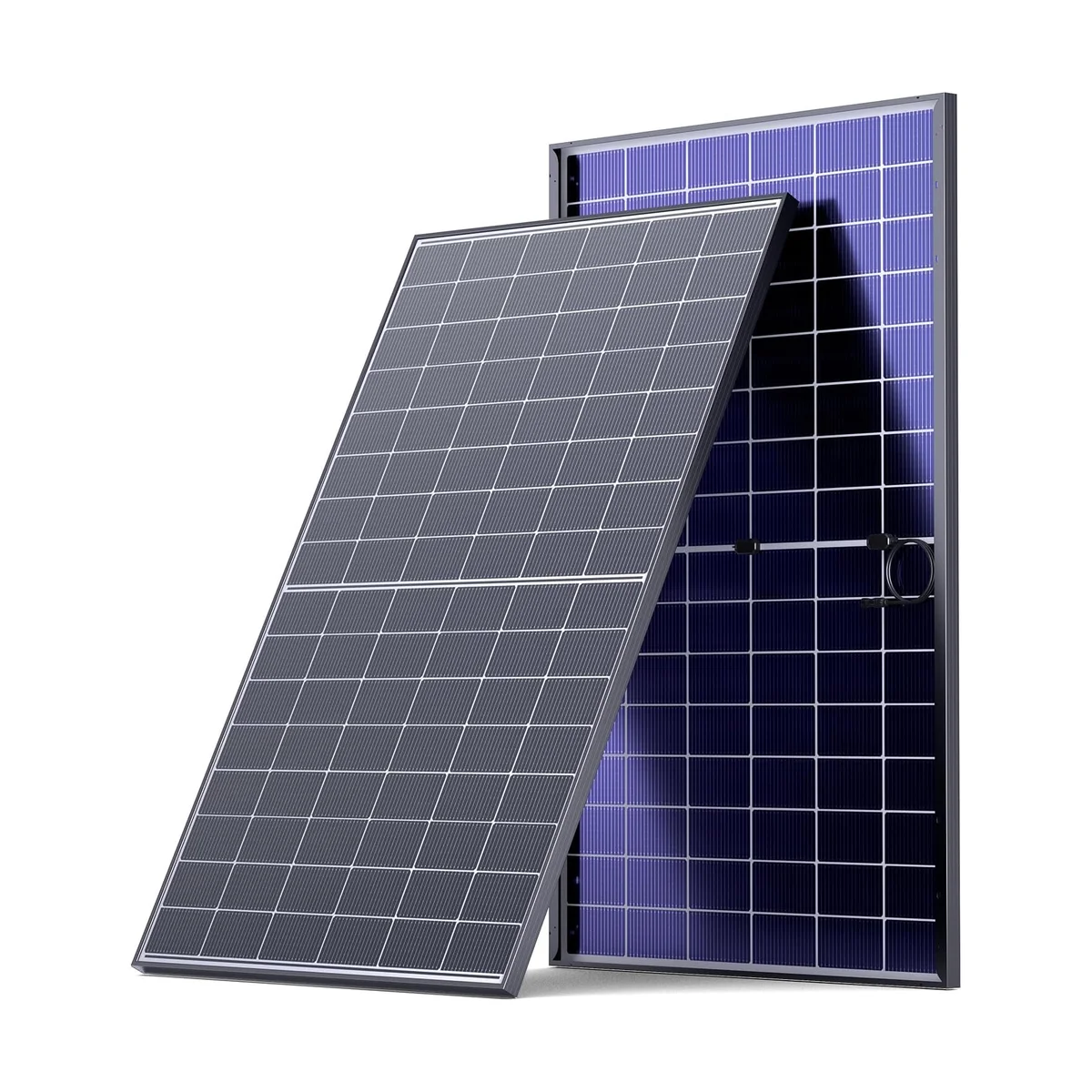
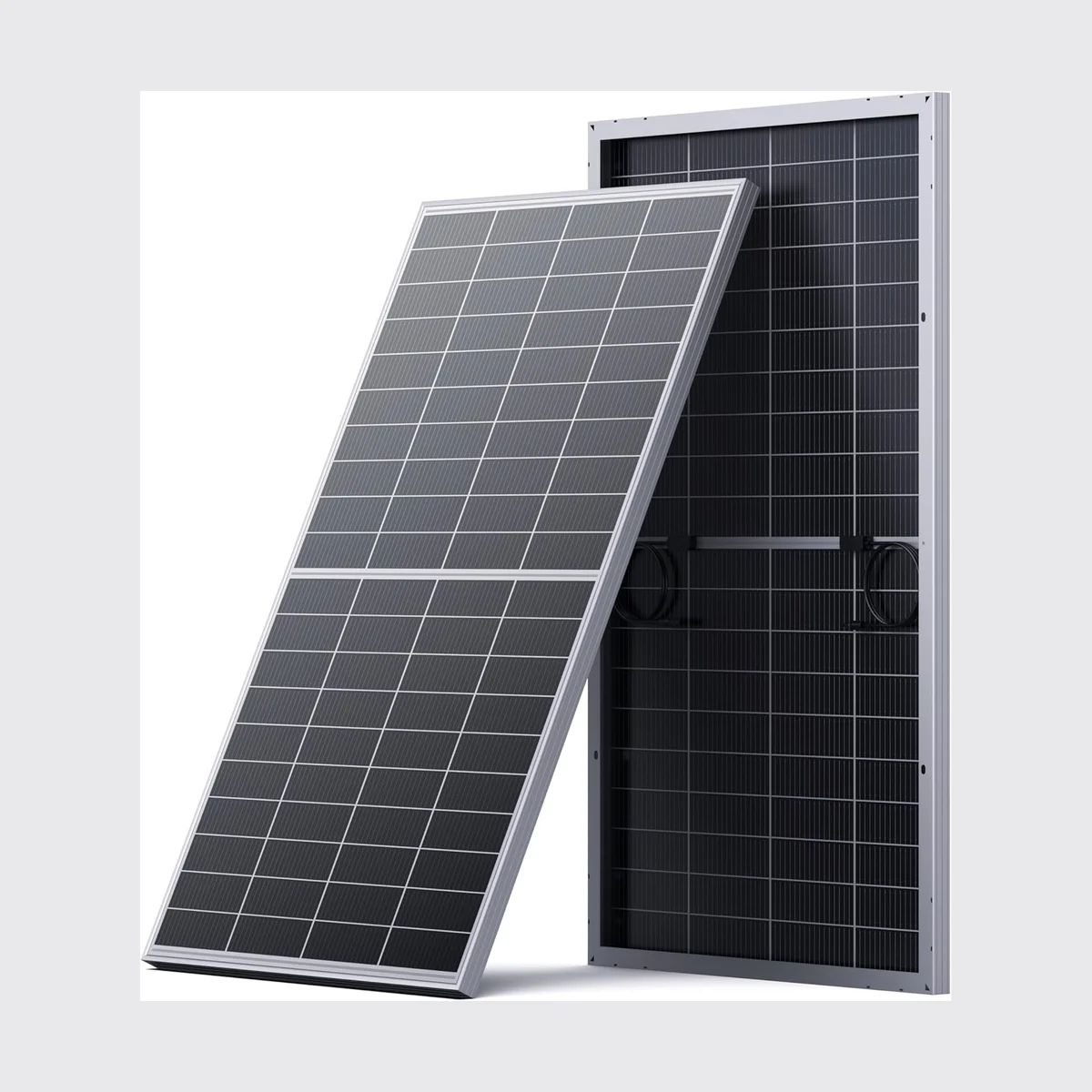
What pushes it past other cheap panels is the half-cut bifacial cell design. There's A Trick For That covered the entire bottom half of the panel and the top half still produced 84W, where a standard panel under the same shade dropped to zero. The Solar Lab described the rigid glass-and-aluminum construction as a weatherproof sandwich that shrugs off hail far better than fabric panels.
The catch is that this is a standard rigid panel, not a folding kit. There is no built-in stand, so most buyers grab two as a 400W setup for around $300 and add an aftermarket mount. If you are willing to do that, nothing here gets you closer to free electrons per dollar.
What It Won't Do
It is a rigid panel pretending to be portable. There is no kickstand and no handle, so Minute Man Solar ended up leaning it against a fence to test it, and reviewers agree you need an aftermarket stand to aim it properly. A single 200W panel also will not fill a large power station quickly, which is why the value case really depends on buying a pair.
Who Should Buy Which
ZOUPW 480W Bifacial
A rigid-folding 480W panel that meets its rating and deploys in 30 seconds
- You charge a large power station and want a panel that actually hits its rating
- You want a folding panel that sets up in under a minute with no separate stand
- You camp or travel by RV and value ready-to-go cables and adapters
- You have clear ground to spread an 11.5-foot panel
- You will pay a premium for measured output over the cheapest option
Callsun 200W Bifacial
The watts-per-dollar champion, especially run as a 400W pair
- You want the most measured watts for every dollar spent
- You are comfortable rigging your own stand or mount
- You plan to run two panels as a 400W array
- You want rigid glass durability that survives hail and weather
- You need strong output even when part of the panel is shaded