The Best Espresso Machines
Verified by
 Hadleigh V. Lead Product Analyst
When you purchase through links on our site, we may earn an affiliate commission.
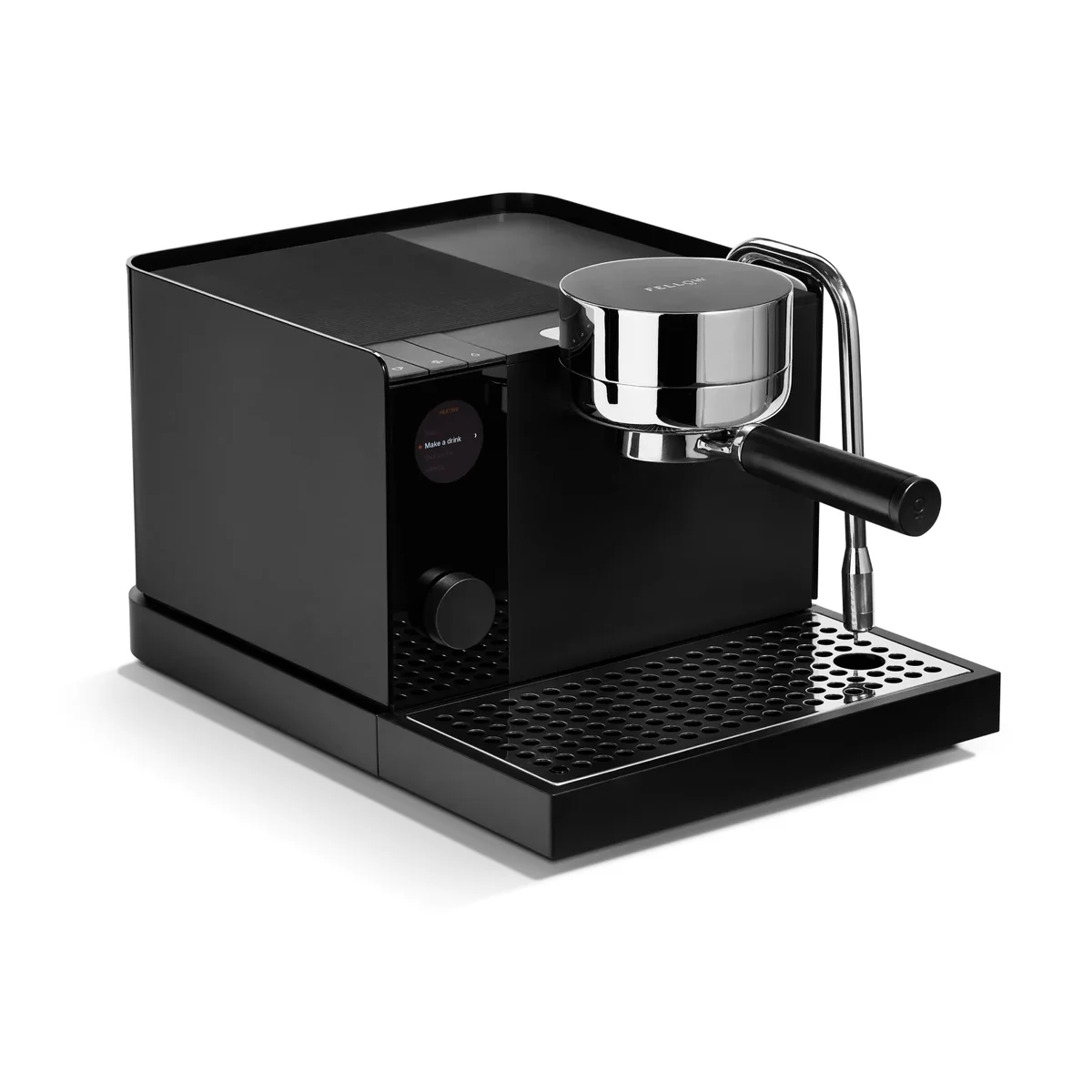
The Fellow Espresso Series 1 does something no other $1,500 machine in this research manages: it is ready to brew in about two minutes and still gives an enthusiast full control over the shot. Lance Hedrick, James Hoffmann, and Daddy Got Coffee all reviewed it in depth, and the heating design is what impressed them first. A flow-through heater feeds a small boiler and an actively heated group, and Hedrick measured shot-to-shot temperature within about 0.3°C once it settled.
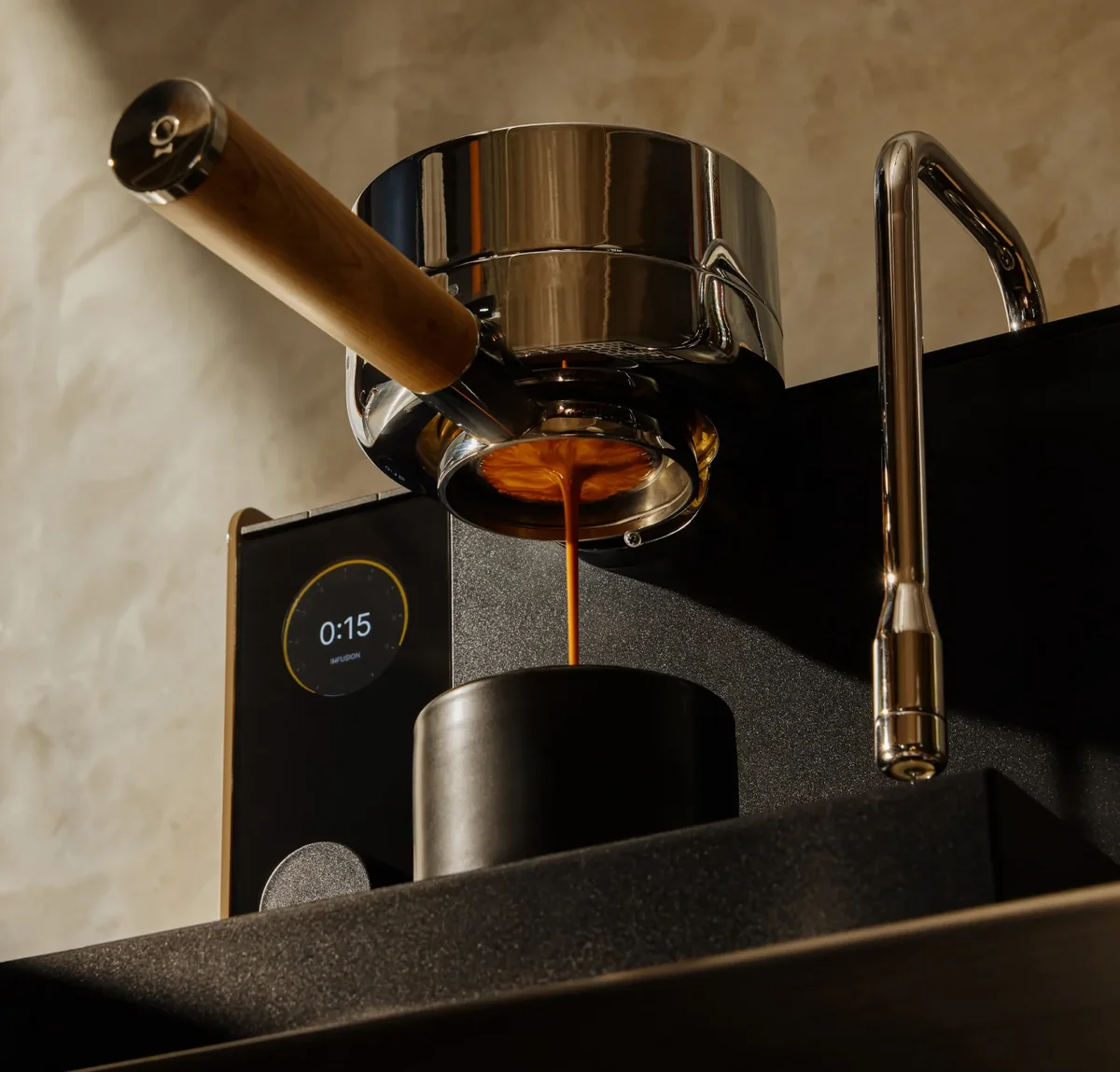
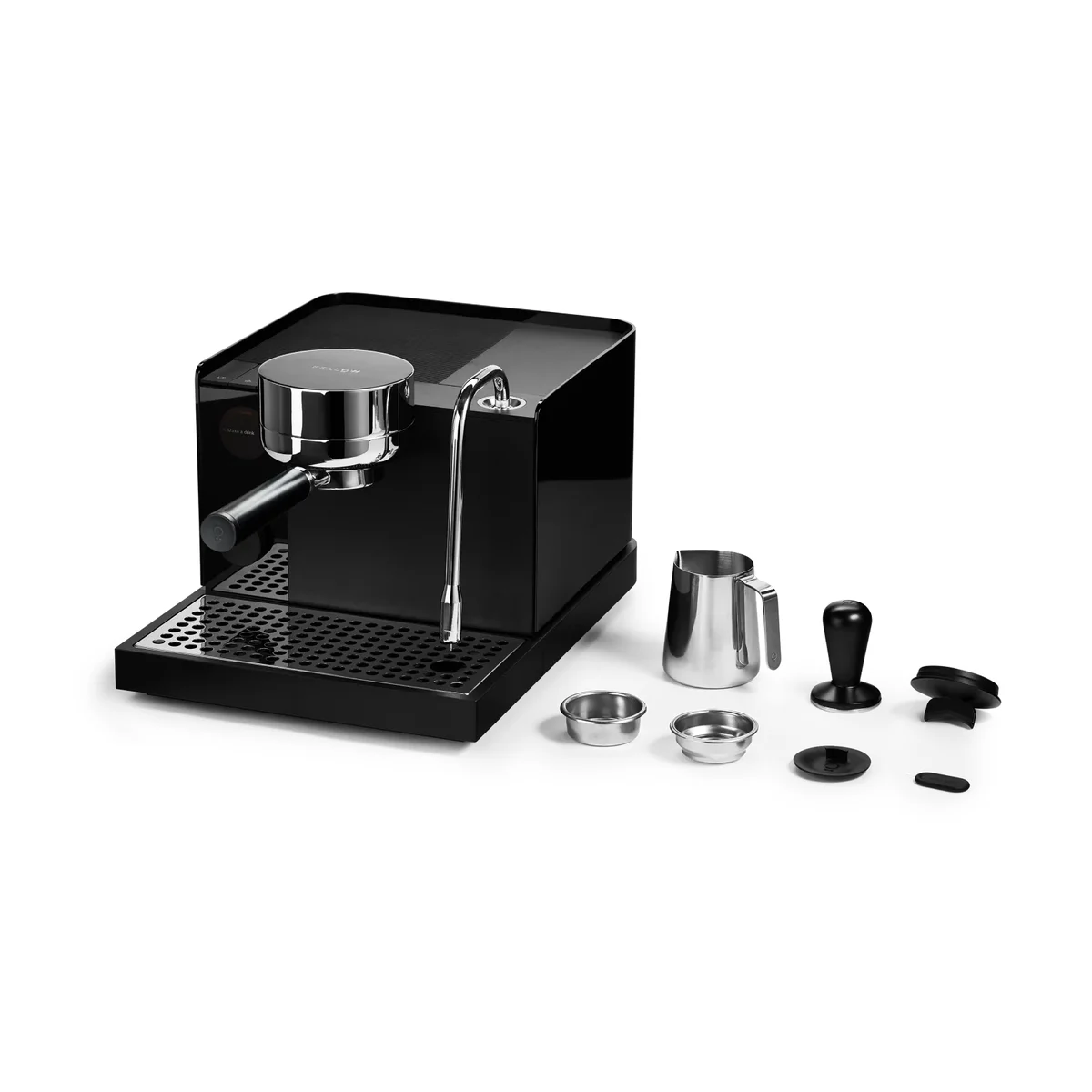
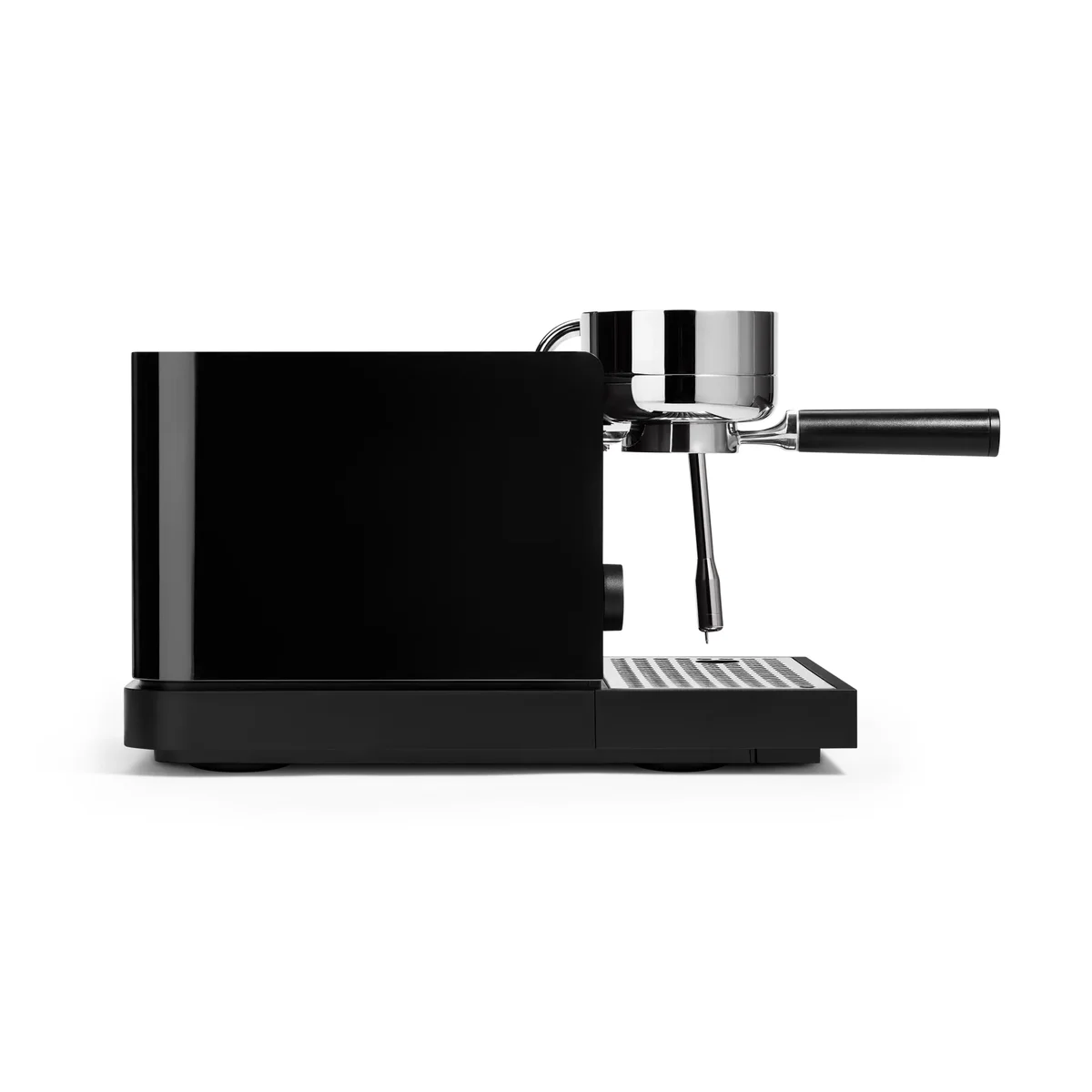
Then there is the profiling. You get up to 10 programmable pressure stages, adjustable pre-infusion, and temperature offsets, either on the machine or in Fellow's app. On the Breville Dual Boiler, our previous pick, that kind of control means opening the case for a DIY mod. Hedrick noted that Fellow's head of R&D used the Dual Boiler as the starting point, and the ES1 improves on it where daily use is concerned.
It also works for the person in your house who doesn't care about extraction curves. Daddy Got Coffee built his review around exactly that: the guided Make a Drink mode walks a beginner through each step, and the steam wand has a thermal probe in the tip that stops at the target temperature. One machine now serves both of them.
What It Won't Do
For $1,500 there is a lot of plastic. The body panels, drip tray, and water tank are powder-coated plastic, and James Hoffmann found the stock portafilter's plastic handle awkward enough to call it frustrating. Repair is the bigger worry. A teardown cited by Hedrick and Daddy Got Coffee found dozens of bottom screws, plastic thread-forming fasteners, and a crammed interior, so any fault means shipping the machine to Fellow's service center. The software is also still maturing: Hoffmann showed a pressure ramp-down that wobbles instead of sloping smoothly, and there is no Bluetooth scale support yet.
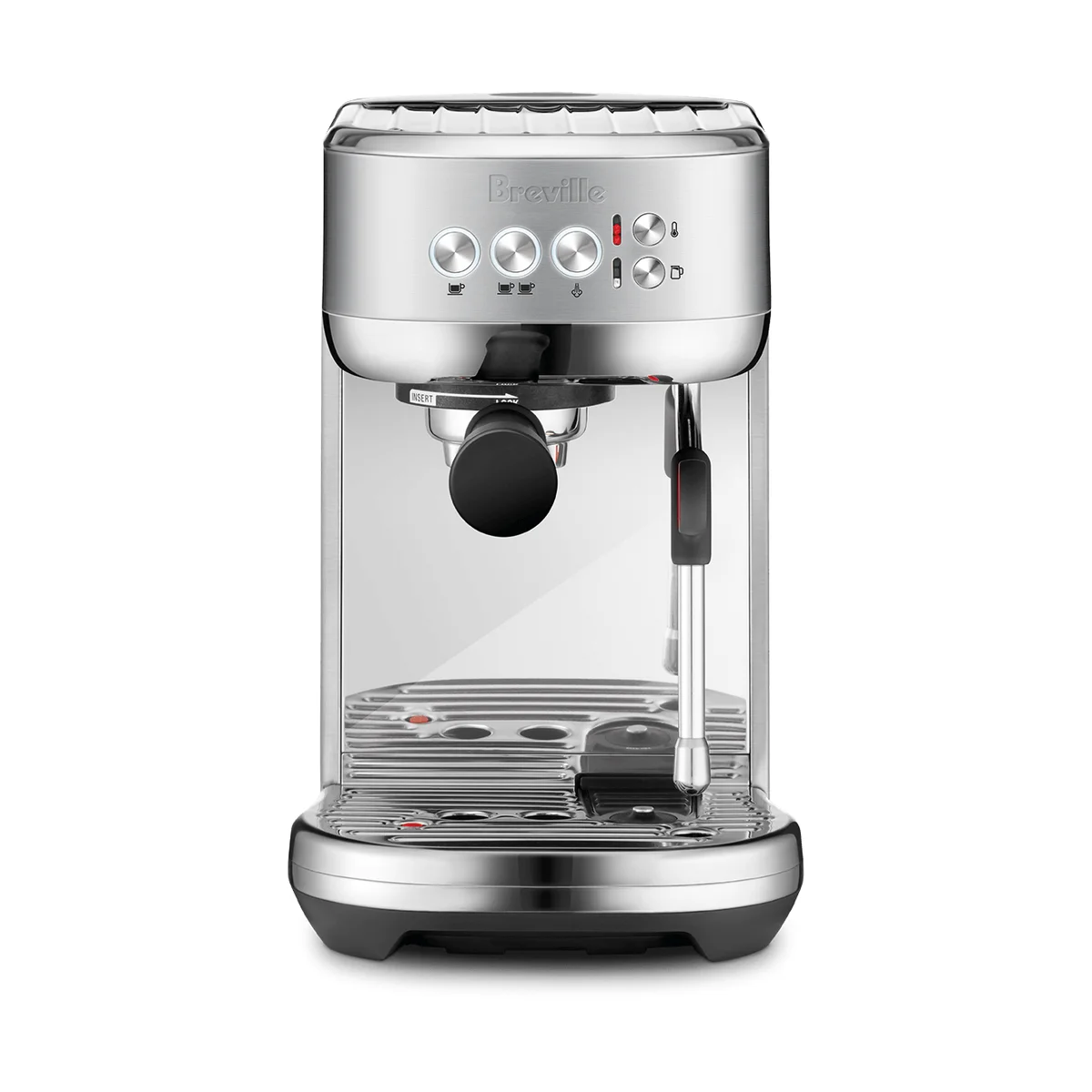
The Breville Bambino Plus is the machine reviewers kept recommending to beginners, and at $499.95 it costs a third of the ES1. Lance Hedrick, Alternative Brewing, Seattle Coffee Gear, and Whole Latte Love all put it at or near the top of their entry-level picks.
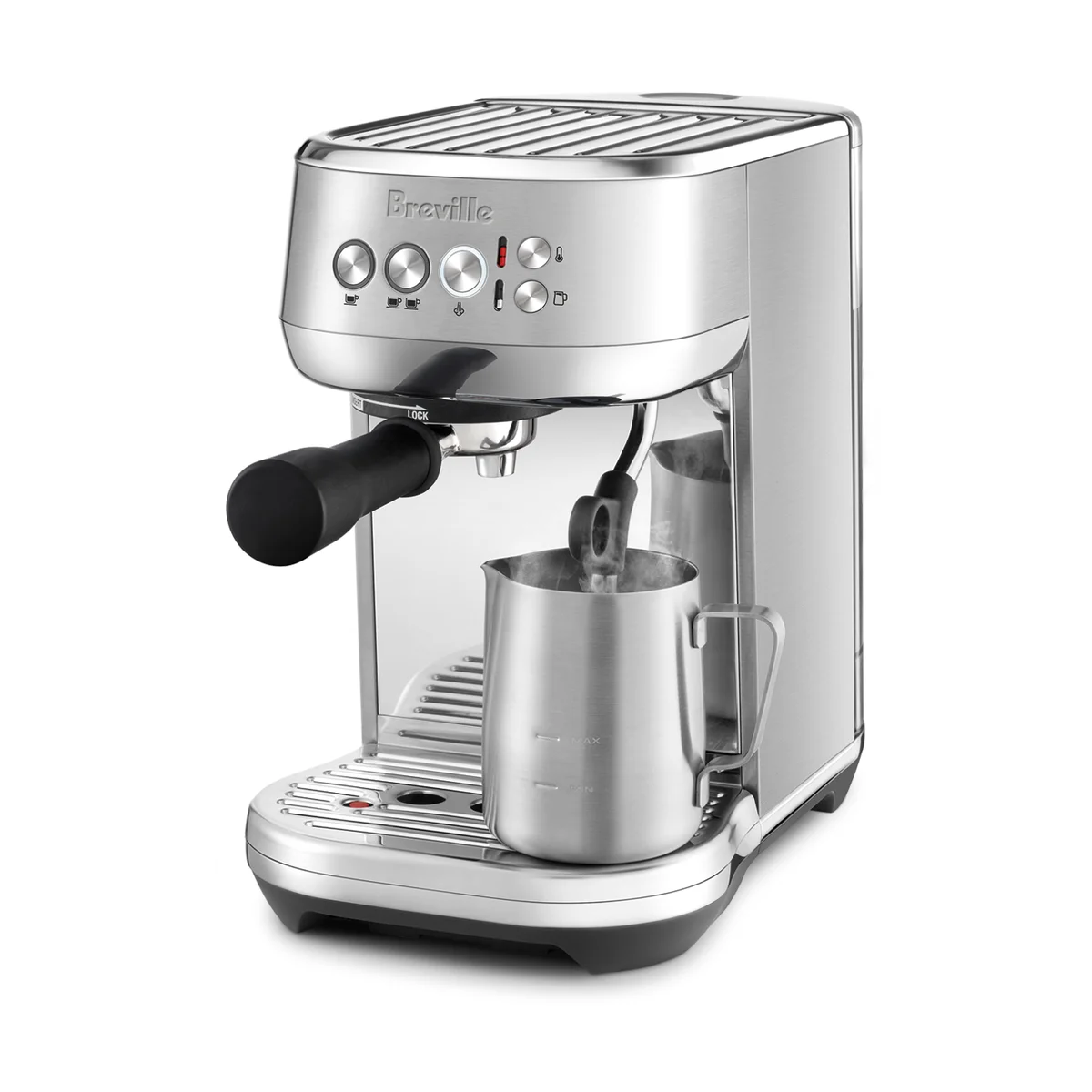
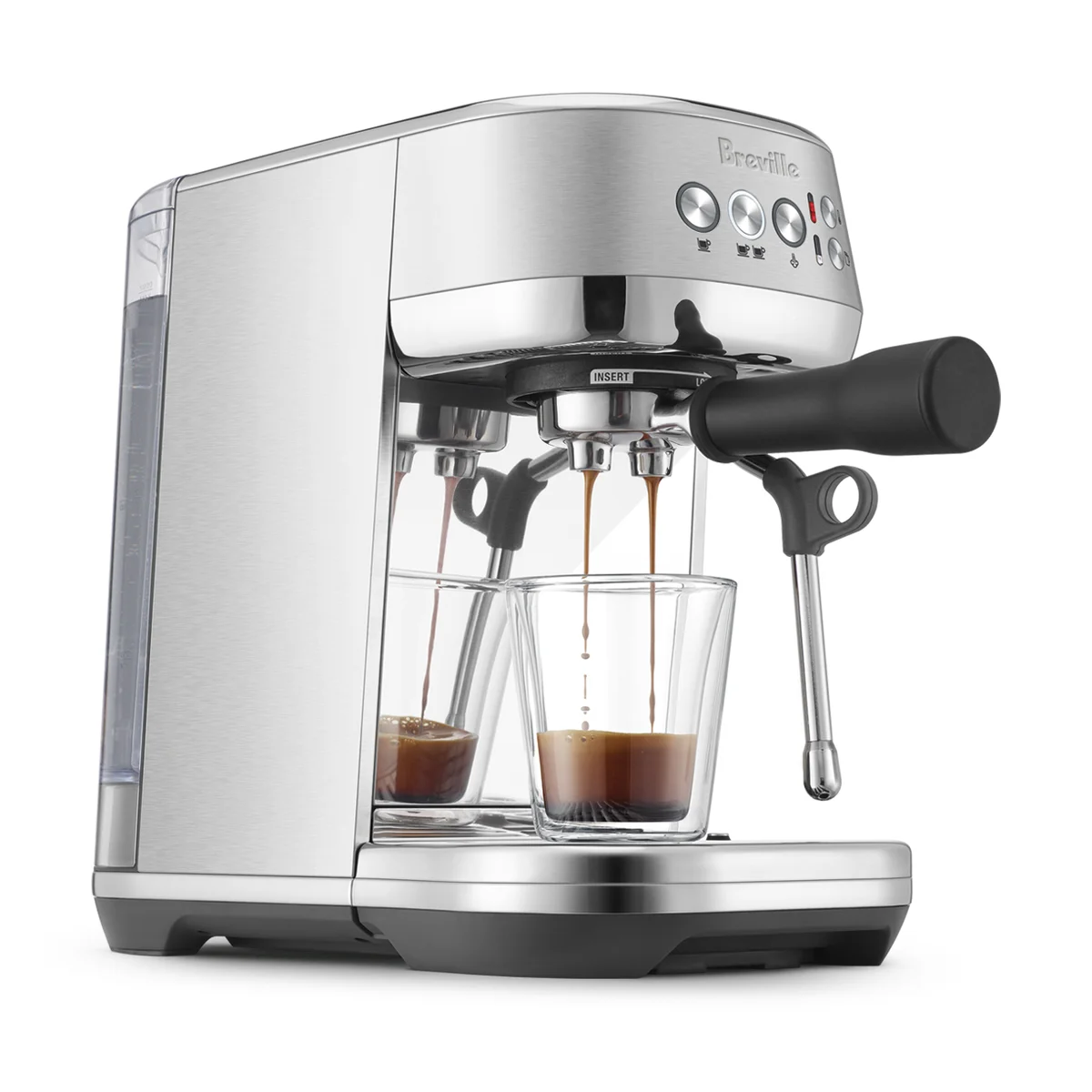
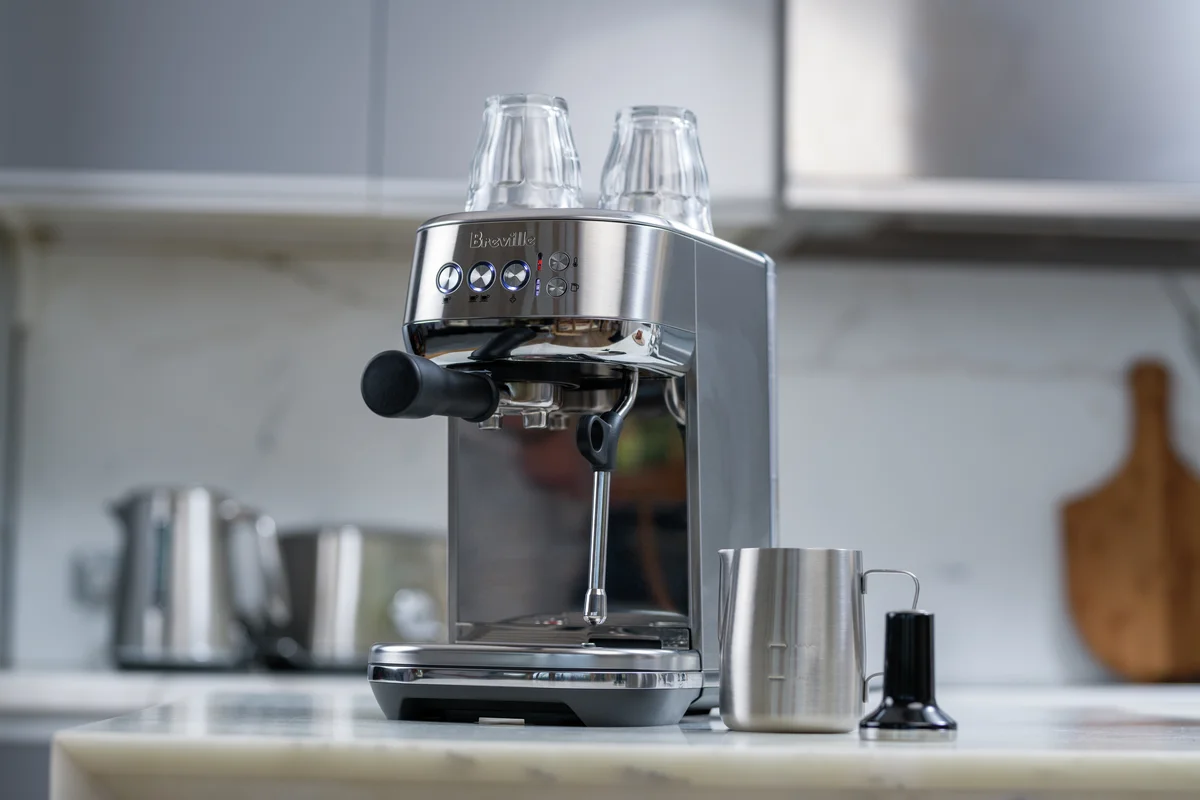
Milk is where it earns that spot. The automatic steam wand has three temperature and three texture settings, textures the milk hands-free, and purges itself when you lower it. Alternative Brewing called the results shockingly good, and in a head-to-head it gets remarkably close to the ES1's milk for a fraction of the money.
The espresso side is honest too. ThermoJet heating is ready in 3 seconds, extraction is capped at a proper 9 bar with low-pressure pre-infusion, and a 3-way solenoid leaves a dry puck. Paired with a good grinder, reviewers found its shots hard to tell apart from machines costing three times as much.
What It Won't Do
The instant heat-up has a catch. The group and portafilter start cold and pull heat out of the first shot, so Alternative Brewing treats a blank hot-water flush as mandatory before brewing. The machine is also light enough to slide on the counter when you lock in the portafilter, so you end up holding it with your other hand. The small drip tray fills quickly because of the auto-purge and solenoid, and the stock plastic tamper should be replaced on day one. You can't adjust temperature or pressure at all, so there is little room to grow into.
Who Should Buy Which
Fellow Espresso Series 1
Two-minute heat-up and native pressure profiling in a machine the whole household can use
- You drink straight espresso or light roasts and want to experiment with pressure profiles
- You share the machine with someone who just wants a guided latte
- You want to go from switched off to brewing in about two minutes
- You would rather have profiling built in than mod a machine yourself
- You are comfortable with factory service in place of DIY repairs
Breville Bambino Plus
Café-grade microfoam without the learning curve, ready three seconds after you switch it on
- You mostly drink lattes, flat whites, or cappuccinos
- You are new to espresso and want a short learning curve
- You have a small kitchen or apartment counter
- You want to spend under $500 on the machine and put the rest toward a good grinder
- You want a drink ready seconds after switching it on